
Weaponized Incompetence at Work: What It Is and How to Deal With It
Weaponized incompetence is doing a task badly on purpose, or claiming you cannot do it, so that someone else takes it over. Look for selective gaps and mistakes that cluster around the same unwanted tasks. Managers should address the repeated pattern, not a single slip, by tracking who owns what and talking directly about ownership.

Weaponized incompetence is when someone does a task badly on purpose, or says they cannot do it, so that someone else ends up taking it over. It is rarely said out loud. It sounds like "I'm just not good at this", repeated about the same unwanted jobs.
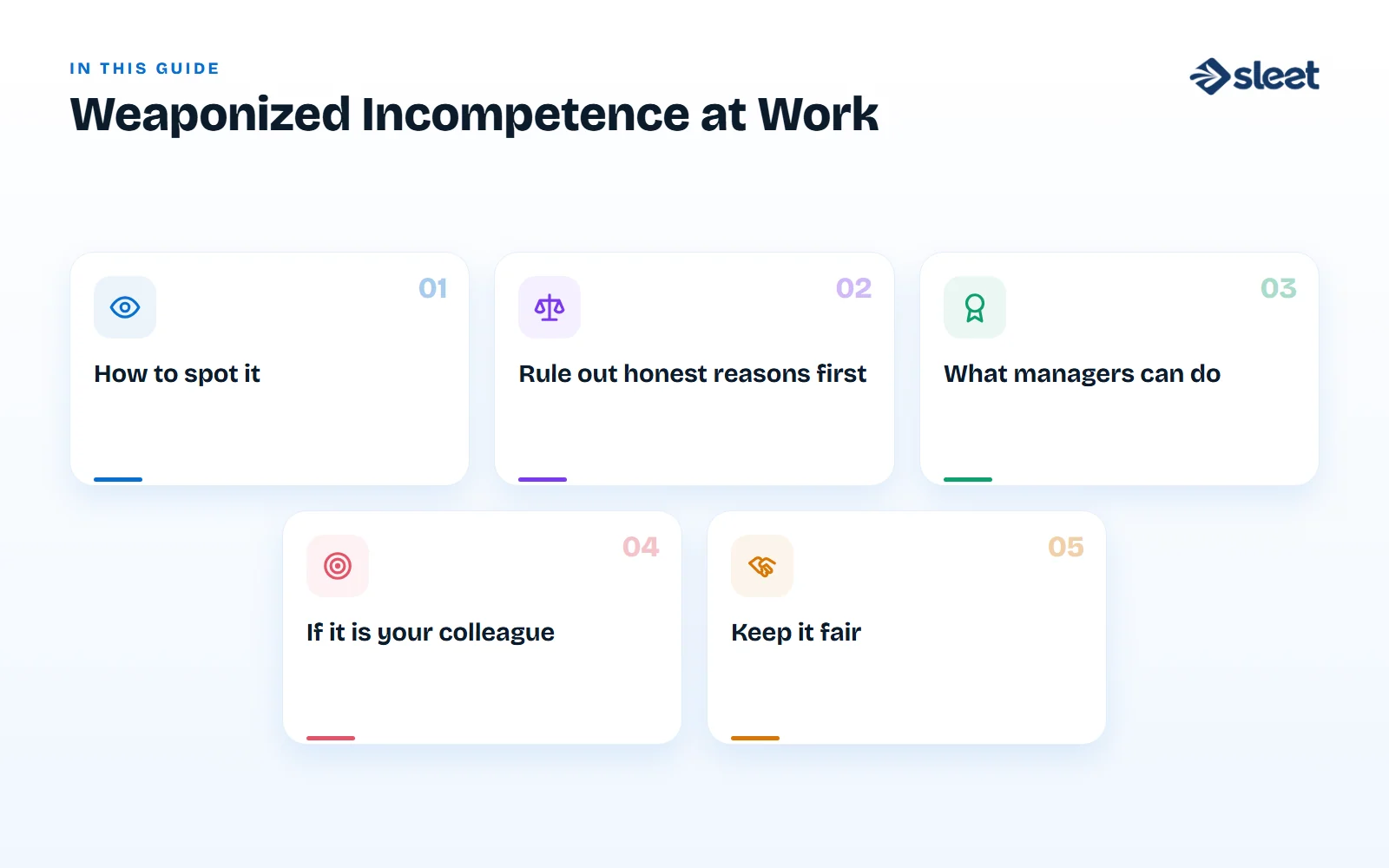
How to spot it
- ✓The weakness is selective. The person who "cannot work out" the expense report has no trouble with work they enjoy.
- ✓Mistakes cluster around the same few tasks, not across the whole role.
- ✓Work that was passed on stays passed on. Nobody formally reassigned it. It stayed with whoever picked up the slack.
One missed deadline is not a pattern. Look for the same task, the same excuse and the same person fixing it, three or four times over a few months.

Rule out honest reasons first
Before you decide it is deliberate, check the plain explanations. Was the person trained? Were the instructions clear? Is the task badly designed? Is their workload already too heavy? A skills gap and a habit of avoidance need different responses.
What managers can do
- Write down who owns each task and since when. This behaviour depends on that being vague.
- Talk about the pattern, not the person's character. For example: "The last four reports needed rework, and each time Priya fixed them. I need these right the first time."
- Offer help once, such as a short training session, a template or a checklist. Then expect the standard.
- Keep dated notes of what happened. If it continues, move to a documented performance plan.
- Look at who has been absorbing the extra work and fix their load too.

If it is your colleague
Say what you have noticed and what you need from them, and ask your manager to confirm who owns the task. Do not quietly keep doing it. That is how a favour becomes a permanent duty.
Keep it fair
Describe what happened and what has to change, and leave out labels. The same behaviour can come from burnout, fear of getting it wrong or instructions that were never clear.

Written by
HR Manager, Airwix Technologies (Sleet)
Nihit Dobariya is the HR Manager at Airwix Technologies in Ahmedabad, where he runs HR and payroll for the team behind Sleet. He writes about payroll, PF and ESIC, professional tax, the labour codes and everyday HR practice for Indian employers, and checks each rule against the official notification before it is published.
LinkedIn profile →