
Value-Based Recruitment: Hiring for Fit Without the Bias Risk
Value-based hiring checks fit with company values, but "culture fit" without a rubric turns into bias. Define each value as an observable behaviour, ask every candidate the same structured questions, score them against one rubric, and assess values separately from skills so a high score on one cannot cover a weak score on the other.

Value-based recruitment means hiring for alignment with a company's stated values as well as for skills. Done well, it improves retention and teamwork. Done badly, "culture fit" turns into an excuse to hire people who resemble the current team. The fix is a rubric.
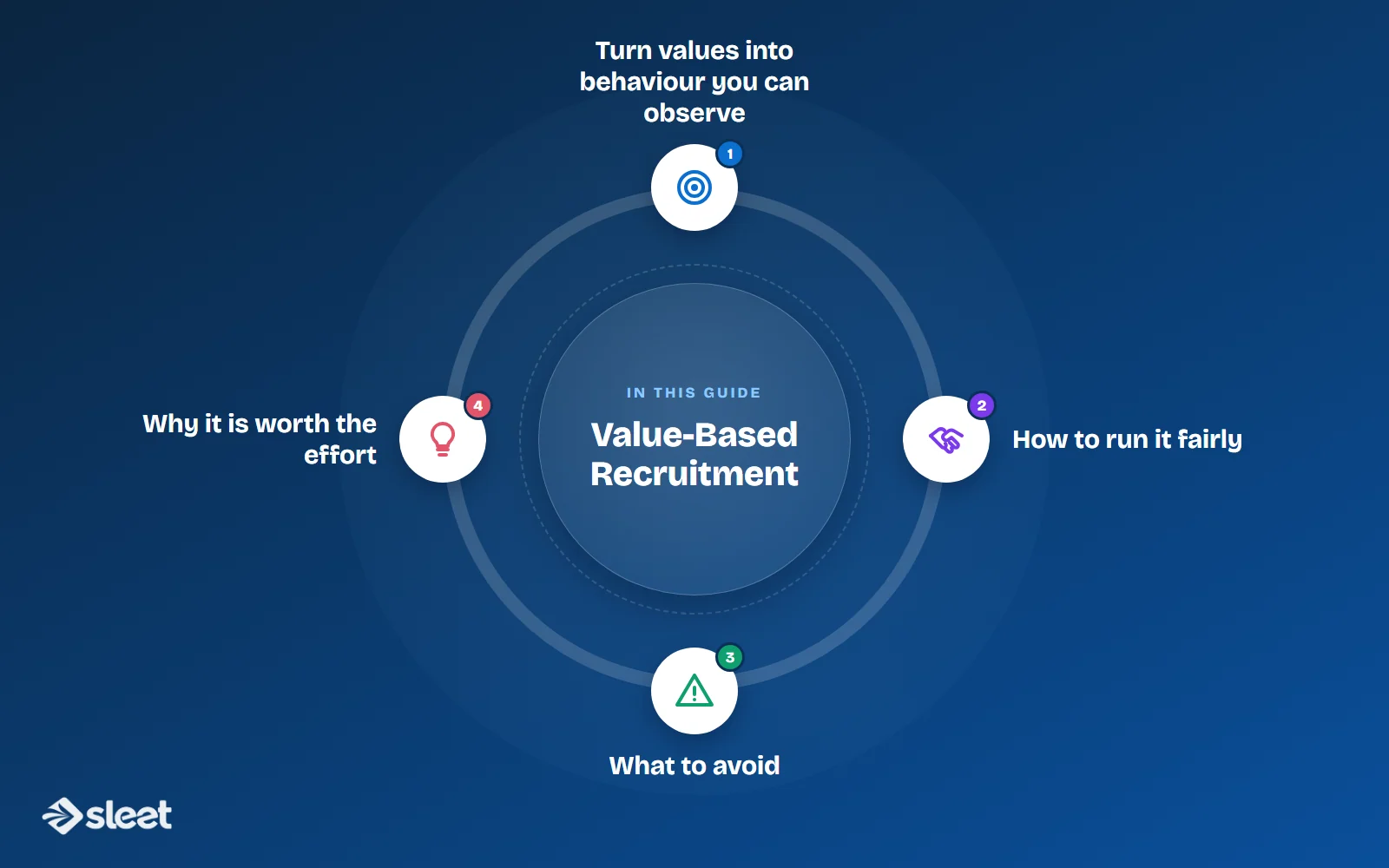
Turn values into behaviour you can observe
"Good vibes" cannot be assessed. "Takes ownership of mistakes without being asked" can. For each value, write down the behaviour you would see in practice.
| Value | Observable behaviour | Question to ask | A strong answer includes |
|---|---|---|---|
| Ownership | Raises problems early and fixes them | Tell me about a mistake you found in your own work | What they did, how soon, and what changed |
| Candour | Gives direct feedback respectfully | Describe a time you disagreed with your manager | A specific example and the outcome |
| Learning | Seeks feedback and acts on it | What did you learn last year that you now use at work? | A concrete skill and how it is applied |

How to run it fairly
- Ask every candidate the same questions in the same order.
- Score each answer against the same rubric, and write the score down before discussing.
- Assess values and skills separately. A strong values score should not hide a weak skills score, or the other way round.
- Use more than one interviewer, and have them score independently first.
- Look at who you hire. Compare outcomes across groups over time to spot hidden bias.
What to avoid
- ✓Questions about family, religion, caste or other protected matters.
- ✓"Would I enjoy a long train journey with them?" tests.
- ✓Treating a different background or way of speaking as a values problem.

Why it is worth the effort
When values assessment is structured and consistent, it helps predict who will stay and work well with the team. Someone who is technically strong but works very differently from the team often leaves within the first year, whatever their skills.

Written by
HR Manager, Airwix Technologies (Sleet)
Nihit Dobariya is the HR Manager at Airwix Technologies in Ahmedabad, where he runs HR and payroll for the team behind Sleet. He writes about payroll, PF and ESIC, professional tax, the labour codes and everyday HR practice for Indian employers, and checks each rule against the official notification before it is published.
LinkedIn profile →