
Skill-Based Hiring: How to Hire for Ability Instead of Degrees
Skill-based hiring judges candidates on what they can do, not where they studied or worked. Define the skills the role needs, drop rigid degree filters, use work samples and structured interviews, score with a rubric, keep tests under two hours in total and pay for long assignments. It widens the talent pool and reduces bias.

Skill-based hiring focuses on what a candidate can do rather than where they studied or where they worked. It widens the talent pool, reduces bias and often leads to better matches, because the evaluation is based on evidence of ability.
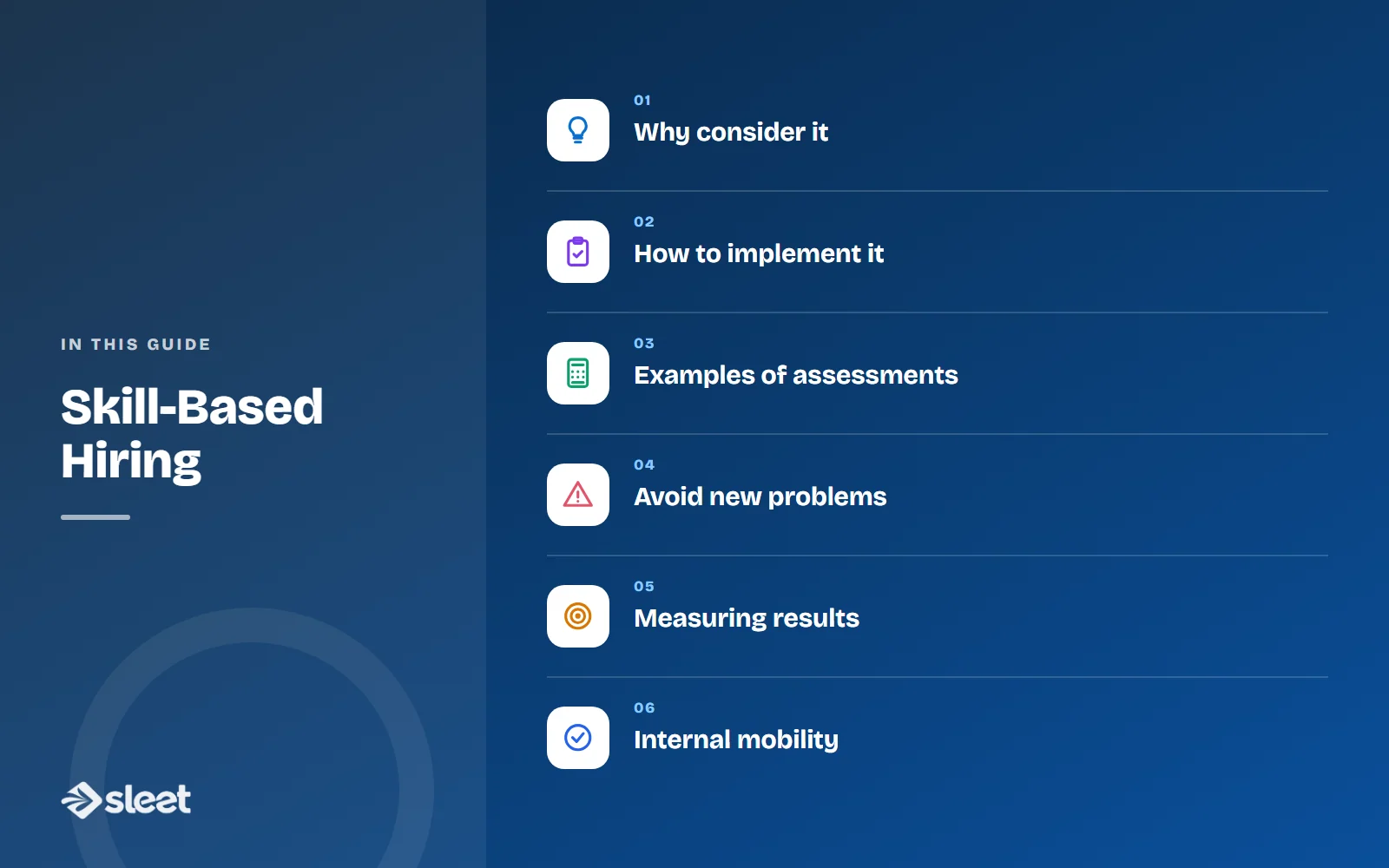
Why consider it
- ✓Degrees and pedigrees are weak predictors of performance for many roles.
- ✓Talent exists outside the usual colleges and cities.
- ✓Skills can be demonstrated through projects, certifications and work samples.
- ✓Roles change quickly, and skills matter more than titles.

How to implement it
- ✓Step 1, define the skills: List the technical and behavioural skills needed to succeed in the role, based on actual work.
- ✓Step 2, rewrite job descriptions: Replace rigid degree and years-of-experience filters with skill requirements.
- ✓Step 3, choose assessments: Use work-sample tasks, case exercises, structured interviews and practical tests that mirror the job.
- ✓Step 4, score consistently: Create a rubric and train interviewers to use it.
- ✓Step 5, widen sourcing: Look at bootcamps, internal candidates, career returners and community programmes.
- ✓Step 6, support new hires: Offer training to fill gaps and a good onboarding plan.
Examples of assessments
- ✓A payroll candidate processes a sample salary sheet with statutory deductions.
- ✓A sales candidate role-plays a discovery call.
- ✓A recruiter drafts a job post and screens three sample resumes.
- ✓A developer completes a small, realistic task.

Avoid new problems
- ✓Keep tests short and relevant, ideally under two hours in total.
- ✓Pay for long assignments.
- ✓Make sure tests are accessible and not biased towards certain backgrounds.
- ✓Use the same assessment for all candidates for a role.
Measuring results
Track quality of hire, time to hire, retention and diversity of applicants. Compare with earlier results to see whether the approach is working.
Internal mobility
Skills data also helps in placing existing employees in new roles, saving recruitment cost and improving retention.
A degree tells you where someone has been, and a work sample shows what they can do next.
Start with one role family, learn from the results and expand once interviewers are comfortable with the process.

Written by
HR Manager, Airwix Technologies (Sleet)
Nihit Dobariya is the HR Manager at Airwix Technologies in Ahmedabad, where he runs HR and payroll for the team behind Sleet. He writes about payroll, PF and ESIC, professional tax, the labour codes and everyday HR practice for Indian employers, and checks each rule against the official notification before it is published.
LinkedIn profile →