
Transport Allowance: Rules, Exemption Limits & Calculation
Transport allowance is a fixed monthly payment for commuting to work. Since the 2018 Budget it is fully taxable for most employees, and the old exemption survives only for certain groups, such as employees with disabilities (up to ₹3,200 a month under the old regime). It differs from conveyance allowance, which covers official travel.
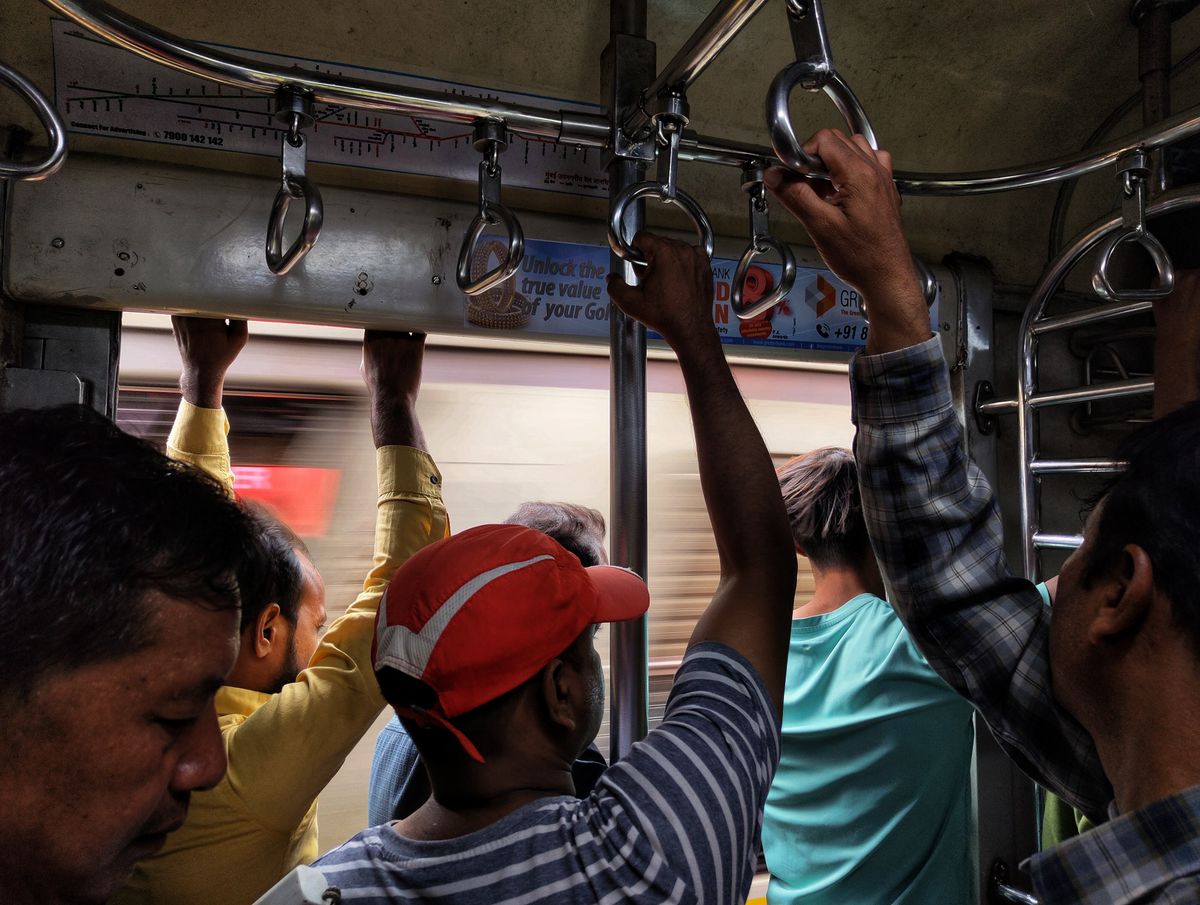
Transport allowance is a fixed monthly payment to help an employee with the cost of getting to work. It is different from conveyance allowance, which reimburses travel for official duties during working hours. For most employees today, transport allowance is fully taxable.
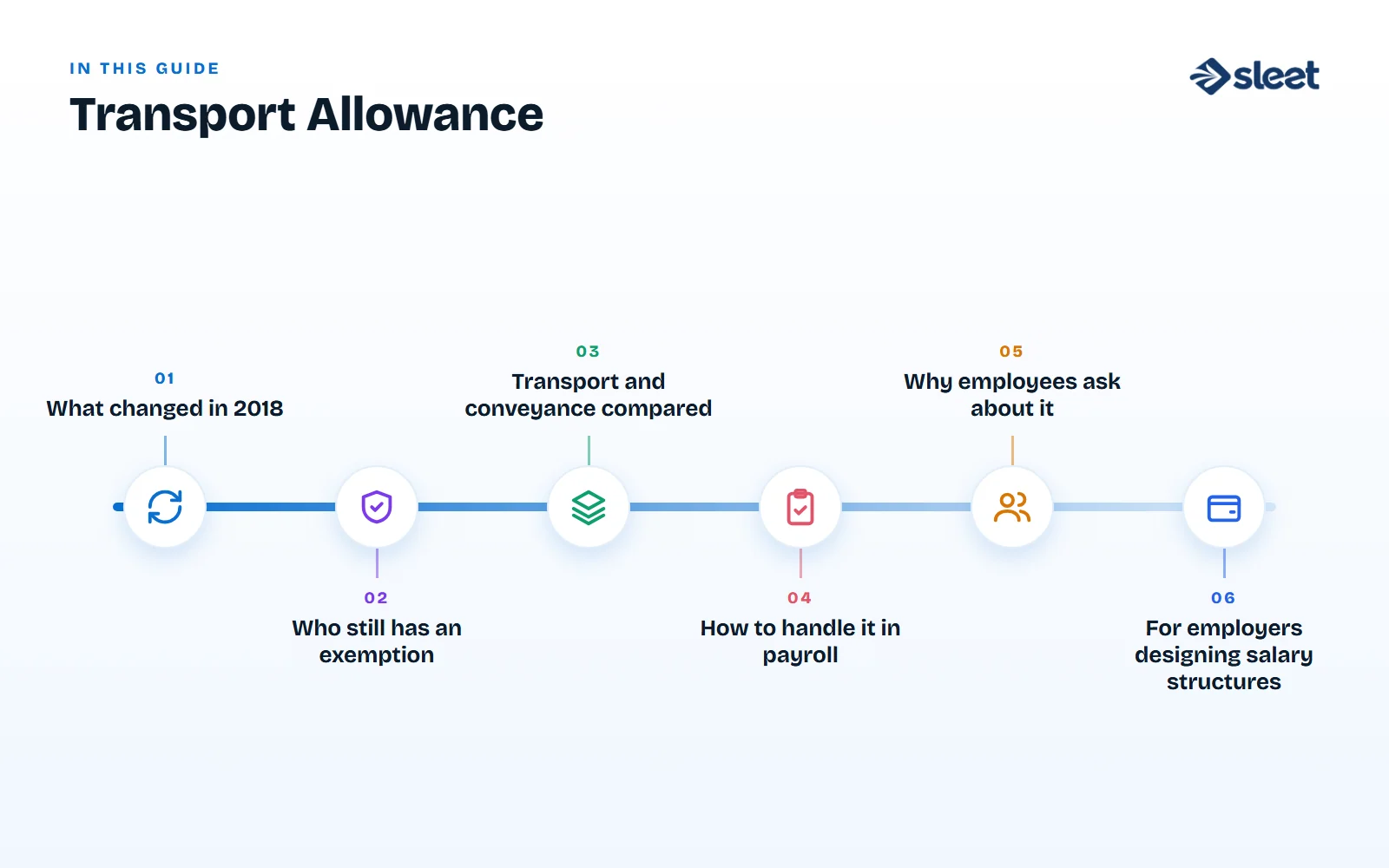
What changed in 2018
Before the 2018 Budget, a fixed amount of transport allowance was exempt from tax. The Budget replaced it, along with medical reimbursement, with a flat standard deduction. For most people the old exemption is gone.

Who still has an exemption
- ✓Certain employees with disabilities. An exemption of up to ₹3,200 a month applies for travel between home and work.
- ✓Employees of transport undertakings. A separate exemption applies for an allowance paid to meet personal costs while on duty.
For everyone else, the allowance is taxed as salary and the employee relies on the standard deduction, which differs between the two tax regimes.
Transport and conveyance compared
| Transport allowance | Conveyance allowance | |
|---|---|---|
| Purpose | Daily commute | Official travel during work |
| Paid as | Fixed monthly amount | Reimbursement against actual use |
| Tax | Mostly taxable | Can be exempt when it covers official travel and is properly documented |

How to handle it in payroll
- Label it on the payslip as taxable, except for the disability and transport-industry cases.
- Collect disability certificates and keep them on file where the exemption is claimed.
- If you want to help with commuting without extra tax, consider a company transport service or a documented reimbursement for official travel. Take advice on how it will be treated.
- Explain this to new joiners, as many assume the old exemption still applies.
Why employees ask about it
Many offer letters still list a transport allowance, so employees expect a tax saving that no longer exists. A short note in the offer letter or the FAQ avoids a flood of questions in January and February.
For employers designing salary structures
A line item that is fully taxable does not reduce tax. It is only a way to divide pay. If you keep it, keep it for a reason, such as meeting the expectations of the market for the role, and do not count on it for tax planning.

Written by
HR Manager, Airwix Technologies (Sleet)
Nihit Dobariya is the HR Manager at Airwix Technologies in Ahmedabad, where he runs HR and payroll for the team behind Sleet. He writes about payroll, PF and ESIC, professional tax, the labour codes and everyday HR practice for Indian employers, and checks each rule against the official notification before it is published.
LinkedIn profile →