
Internet Allowance: Meaning, Taxability & CTC Structuring
Internet allowance is a monthly amount for an employee's broadband or data costs. Reimbursed against actual bills for official use, it is generally not taxed. Paid as a fixed amount regardless of usage, it is taxable salary. Most employers cap it between ₹1,000 and ₹3,000 a month and ask for a bill each month or quarter.

Internet allowance is a monthly amount a company gives employees for broadband, mobile data or Wi-Fi used for work. It became a standard line in many salary structures once hybrid work made a stable connection a basic requirement. How it is taxed depends on how you pay it.
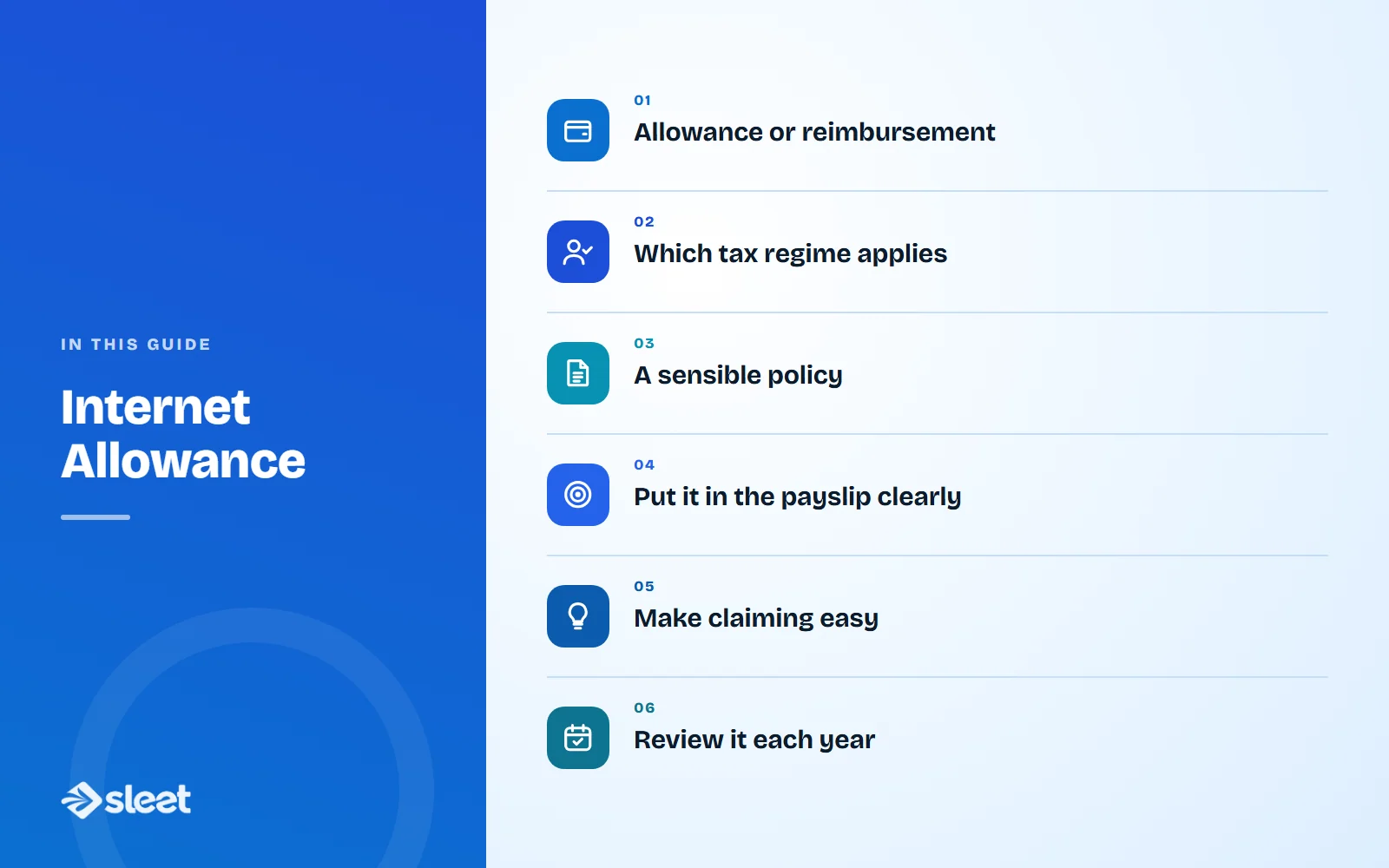
Allowance or reimbursement
| Paid as | How it is generally treated |
|---|---|
| Fixed monthly allowance, no bills | Part of taxable salary |
| Reimbursement of actual internet or phone bills used for work | Generally treated as an official expense and not as salary, if bills are kept |
| Part of an optional flexible benefits plan | Depends on the plan and the employee's tax regime |
The difference is paperwork. If nobody submits a bill, the payment is simply extra pay.

Which tax regime applies
Many exemptions apply only under the old tax regime. The new regime, which is the default, allows far fewer. Ask your tax advisor how your payroll should treat reimbursements for each employee's chosen regime, and test it before you publish the policy.
A sensible policy
- ✓State who is eligible, by role or grade.
- ✓Set a monthly cap. Many employers choose a figure between ₹1,000 and ₹3,000, depending on role.
- ✓Ask for a bill, monthly or quarterly, with the employee's name or a declaration if the plan is shared.
- ✓Set a deadline for claims and say what happens to unclaimed amounts.
- ✓Say that the benefit applies only to work use.

Put it in the payslip clearly
Show the reimbursement as its own line, separate from salary. This keeps the records clean if an auditor asks why some amounts were not taxed.
Make claiming easy
The main reason employees skip a benefit is friction. A claim in the app, with a photo of the bill and an approval on the same day, gets used. A paper form handed to HR at month end does not.
Review it each year
Check actual claims against the cap, and ask whether work-from-home needs have changed. If most people claim the full cap, the cap may be set too low. If few claim at all, the process is probably too hard.

Written by
HR Manager, Airwix Technologies (Sleet)
Nihit Dobariya is the HR Manager at Airwix Technologies in Ahmedabad, where he runs HR and payroll for the team behind Sleet. He writes about payroll, PF and ESIC, professional tax, the labour codes and everyday HR practice for Indian employers, and checks each rule against the official notification before it is published.
LinkedIn profile →