
Reverse Charge Mechanism (RCM) Under GST Explained
Under reverse charge, the buyer, not the seller, pays the GST directly to the government. It applies to notified goods and services (such as GTA freight and legal services from an individual advocate), certain purchases from unregistered suppliers and imports of services. The buyer raises a self-invoice, pays the tax and can generally claim it back as input tax credit.
Normally the seller collects GST from the buyer and pays it to the government. Under the Reverse Charge Mechanism, or RCM, this reverses. The buyer pays the GST directly to the government, even though they are the one receiving the goods or services.
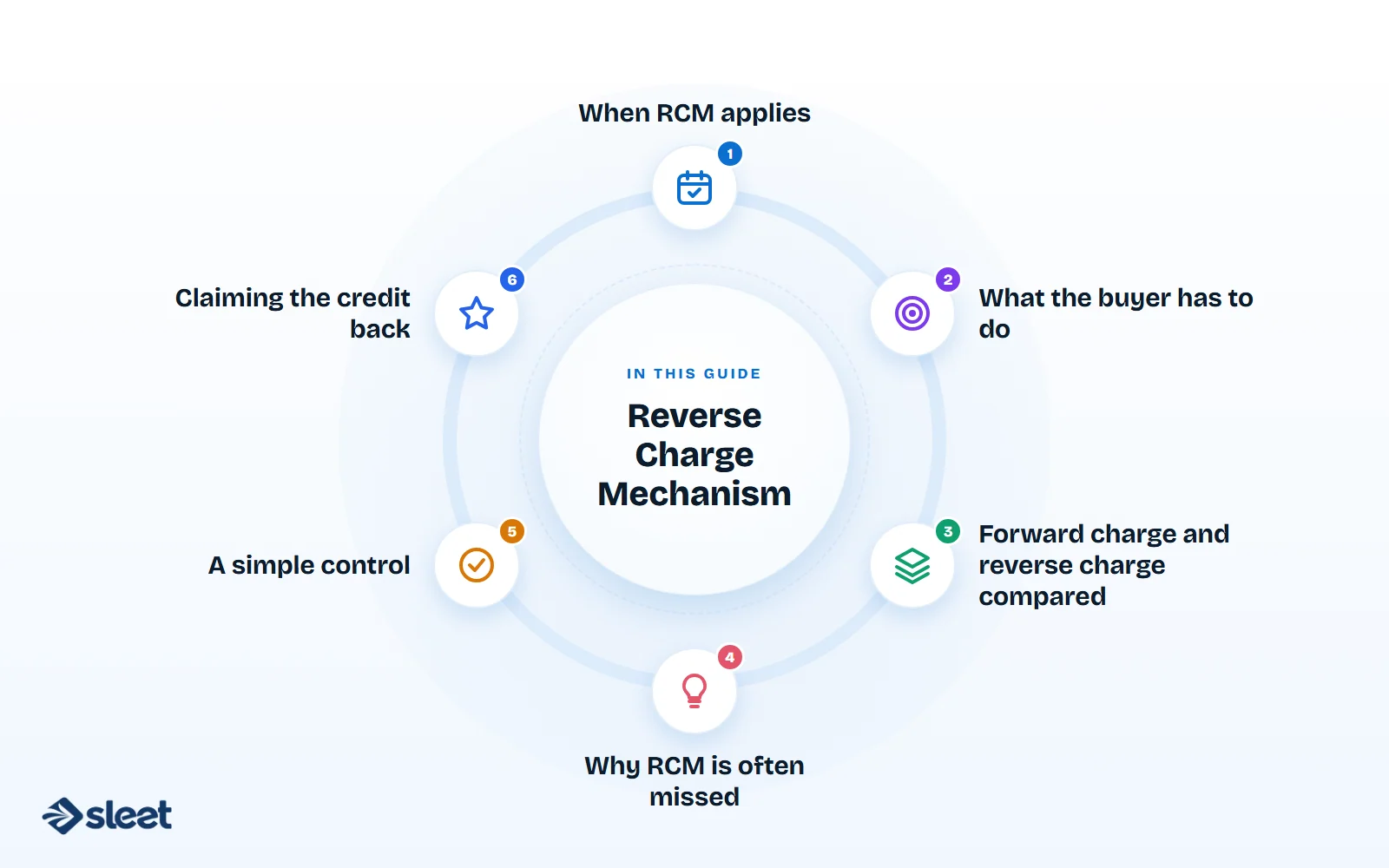
When RCM applies
- ✓Notified goods and services. The government lists certain supplies where RCM always applies. Examples include goods transport agency services and legal services from an individual advocate.
- ✓Certain purchases from unregistered suppliers. Only for specified classes of supply, not for every purchase from an unregistered seller.
- ✓Import of services. GST on services received from outside India is generally payable by the recipient.
The lists change by notification, so check the current one.
What the buyer has to do
- Identify the purchase as one that falls under RCM.
- Issue a self-invoice when the supplier is unregistered, and a payment voucher where needed.
- Pay the tax in cash. RCM tax cannot be paid using input tax credit.
- Report it in the right section of GSTR-3B.
- Claim the credit in the same period, if the purchase is eligible.
Forward charge and reverse charge compared
| Forward charge | Reverse charge | |
|---|---|---|
| Who collects the tax | The supplier | The buyer |
| Who pays the government | The supplier | The buyer |
| Invoice | Issued by the supplier with tax | Supplier may issue without tax, buyer records the tax |
| Credit | Buyer claims on the supplier's invoice | Buyer claims after paying the tax |
Why RCM is often missed
No invoice from the supplier shows the tax, so nothing prompts anyone to record it. The duty to self-invoice and pay sits entirely with the buyer, without any outside reminder.
A simple control
- ✓Keep a list of vendor types and expenses that usually fall under RCM, such as transport and legal fees.
- ✓Tag those vendors in your accounts so their bills are flagged.
- ✓Review the list each month before you file.
Claiming the credit back
The tax paid under RCM is generally available as input tax credit, provided you have paid it and the purchase is for business use. Make sure your finance team tracks which transactions are on the list in the first place, or you may pay the tax and forget to claim the credit.

Written by
Founder, Airwix Technologies (Sleet)
Vatsal Sutariya is the founder of Airwix Technologies in Ahmedabad, the company that builds Sleet: SleetHR for HR and payroll, and Sleet Accounting for GST billing and books. He writes about GST, invoicing, business tax and choosing software for Indian businesses, and checks each rule against the official notification before it is published.
LinkedIn profile →