
Employee Wellbeing: 20 Practical Ideas for Indian Workplaces
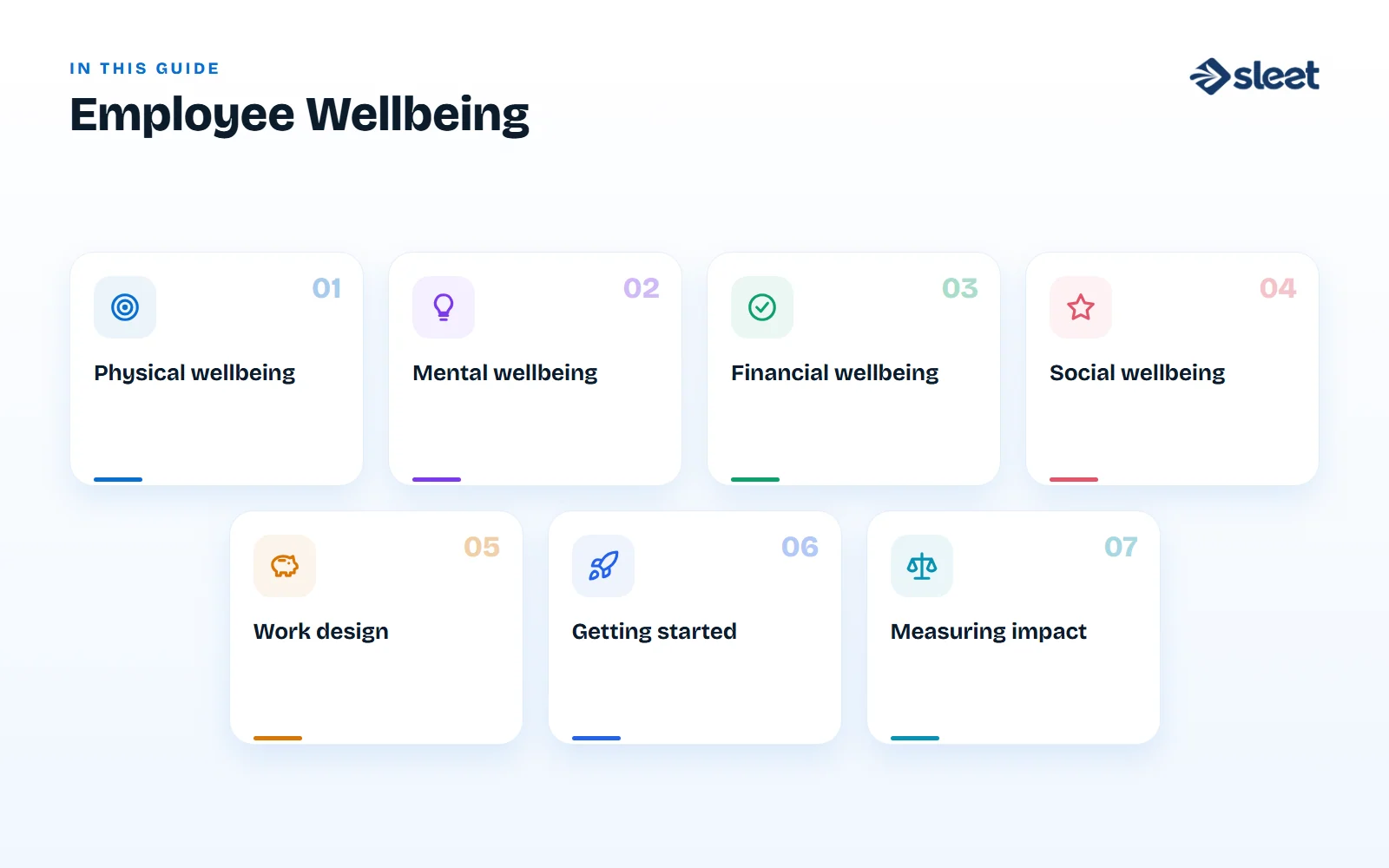
Employee wellbeing covers four areas: physical (check-ups, ergonomics), mental (counselling, manager training), financial (workshops, insurance, timely pay) and social (team events, buddy systems), plus sensible work design such as a right to disconnect. Ask employees what matters most, pick two or three initiatives and track absenteeism and engagement.

Wellbeing is about the whole person, not only the absence of illness. Employees who feel physically healthy, mentally supported, financially secure and socially connected tend to perform better and stay longer.
Physical wellbeing
- ✓Annual health check-ups and vaccination camps.
- ✓Ergonomic assessments for desks and chairs.
- ✓Fitness challenges and group classes.
- ✓Healthy snacks and clean drinking water.
- ✓Walking meetings and standing desks as options.

Mental wellbeing
- ✓Access to counselling through an employee assistance programme.
- ✓Manager training on spotting stress and starting conversations.
- ✓Mental health days or flexible leave.
- ✓Quiet rooms or focus hours.
- ✓Open conversations that reduce stigma.
Financial wellbeing
- ✓Workshops on budgeting, tax saving and retirement planning.
- ✓Salary advance or early-wage access with clear terms.
- ✓Group insurance and accident cover.
- ✓Transparent payslips and timely salary.
- ✓Guidance on investing and avoiding debt traps.

Social wellbeing
- ✓Team events and volunteering.
- ✓Employee networks and interest groups.
- ✓Inclusive celebrations across communities.
- ✓Buddy systems for new joiners.
Work design
- ✓Reasonable workload and realistic deadlines.
- ✓Right to disconnect after hours.
- ✓Flexible start times and hybrid work where the job allows.
- ✓Regular breaks, and holidays that are actually taken.
Getting started
Ask employees what matters most with a short survey. Choose two or three initiatives, communicate them and measure participation. Many programmes fail because people do not know about them, or are afraid of using them.
Measuring impact
Track absenteeism, engagement scores, usage of support services and feedback. Compare before and after for specific programmes.
A wellness programme cannot fix an unsustainable workload.
Combine individual support with fixing the working conditions that cause stress. Leaders should model healthy behaviour, because employees watch what leaders do more than what they say.

Written by
HR Manager, Airwix Technologies (Sleet)
Nihit Dobariya is the HR Manager at Airwix Technologies in Ahmedabad, where he runs HR and payroll for the team behind Sleet. He writes about payroll, PF and ESIC, professional tax, the labour codes and everyday HR practice for Indian employers, and checks each rule against the official notification before it is published.
LinkedIn profile →