
Employee Assistance Programs (EAP): What They Offer and How to Launch One
An employee assistance programme is a confidential, externally run service offering employees, and often their families, counselling and support for stress, burnout, family, legal and financial problems. Pick a provider with qualified counsellors, several languages and strict confidentiality, then launch it with clear communication and manager training, and track usage without identifying anyone.

An Employee Assistance Program, or EAP, is a confidential service that helps employees and often their families deal with personal or work-related problems. It is delivered by an external provider, so employees can seek help without worrying that their manager will find out.
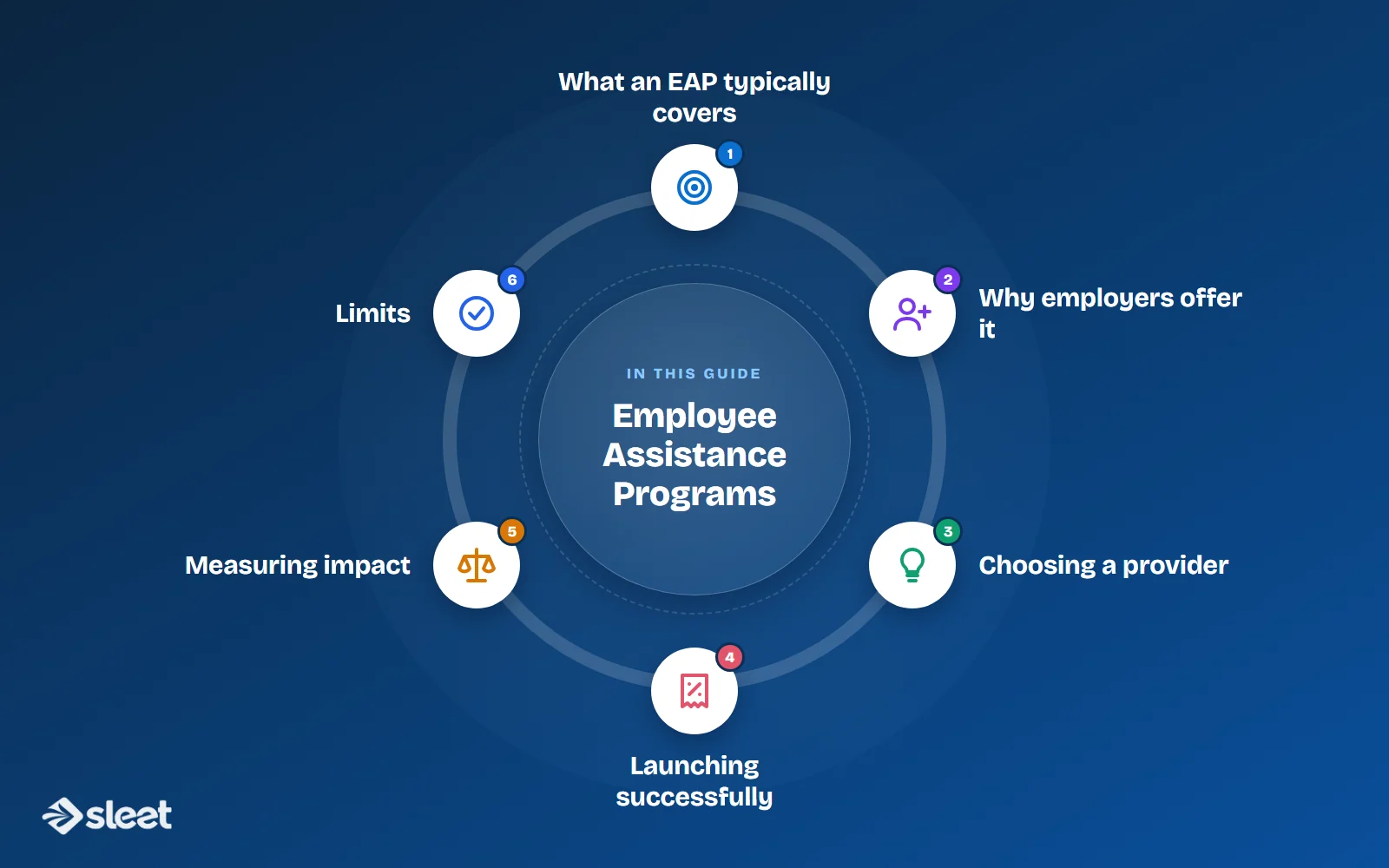
What an EAP typically covers
- ✓Short-term counselling for stress, anxiety, grief and relationship issues.
- ✓Support for work-life balance and burnout.
- ✓Legal and financial consultations.
- ✓Parenting, eldercare and dependent support.
- ✓Substance use and addiction guidance.
- ✓Crisis support after a workplace incident.
- ✓Manager consultation on how to support a team member.

Why employers offer it
- ✓It supports mental health, which affects performance and attendance.
- ✓It can reduce absenteeism and turnover.
- ✓It shows that the company cares, which strengthens trust.
- ✓It gives managers a place to refer people instead of improvising.
Choosing a provider
- ✓Qualified counsellors with experience in Indian contexts.
- ✓Support in multiple languages.
- ✓Phone, video and in-person options.
- ✓Strict confidentiality and data protection.
- ✓24x7 availability for crisis situations.
- ✓Clear reporting on usage that does not reveal individual identity.

Launching successfully
- ✓Explain the service clearly, including that it is free for the employee and confidential.
- ✓Share contact details on the intranet, posters and payslip emails.
- ✓Train managers on how to refer without prying.
- ✓Run awareness sessions to reduce stigma.
- ✓Remind people regularly, not only at launch.
Measuring impact
Track utilisation rate, themes of concern at the aggregate level and feedback scores. Many programmes begin with low usage of about five percent, which grows when trust and awareness increase.
Limits
An EAP supports individuals, but it cannot fix a toxic culture or a punishing workload. Pair it with changes to the working environment.
Offering help is easy. Making it feel safe to ask for it is the real work.
Review the programme every year, collect anonymous feedback and adjust the provider or scope if needed.

Written by
HR Manager, Airwix Technologies (Sleet)
Nihit Dobariya is the HR Manager at Airwix Technologies in Ahmedabad, where he runs HR and payroll for the team behind Sleet. He writes about payroll, PF and ESIC, professional tax, the labour codes and everyday HR practice for Indian employers, and checks each rule against the official notification before it is published.
LinkedIn profile →