
Employee Retention Strategies That Work: A Practical Playbook
People mostly leave over poor managers, limited growth, pay that lags the market, burnout and lack of recognition, so start by checking exit data to see which applies. Then fix pay gaps, train managers, show career paths, offer flexibility, run stay interviews and watch warning signs such as falling engagement and long gaps without a promotion.

Replacing an employee costs far more than most companies expect: recruiting, training, lost productivity and the knowledge that walks out of the door. Retention is therefore a business priority, not a feel-good project.
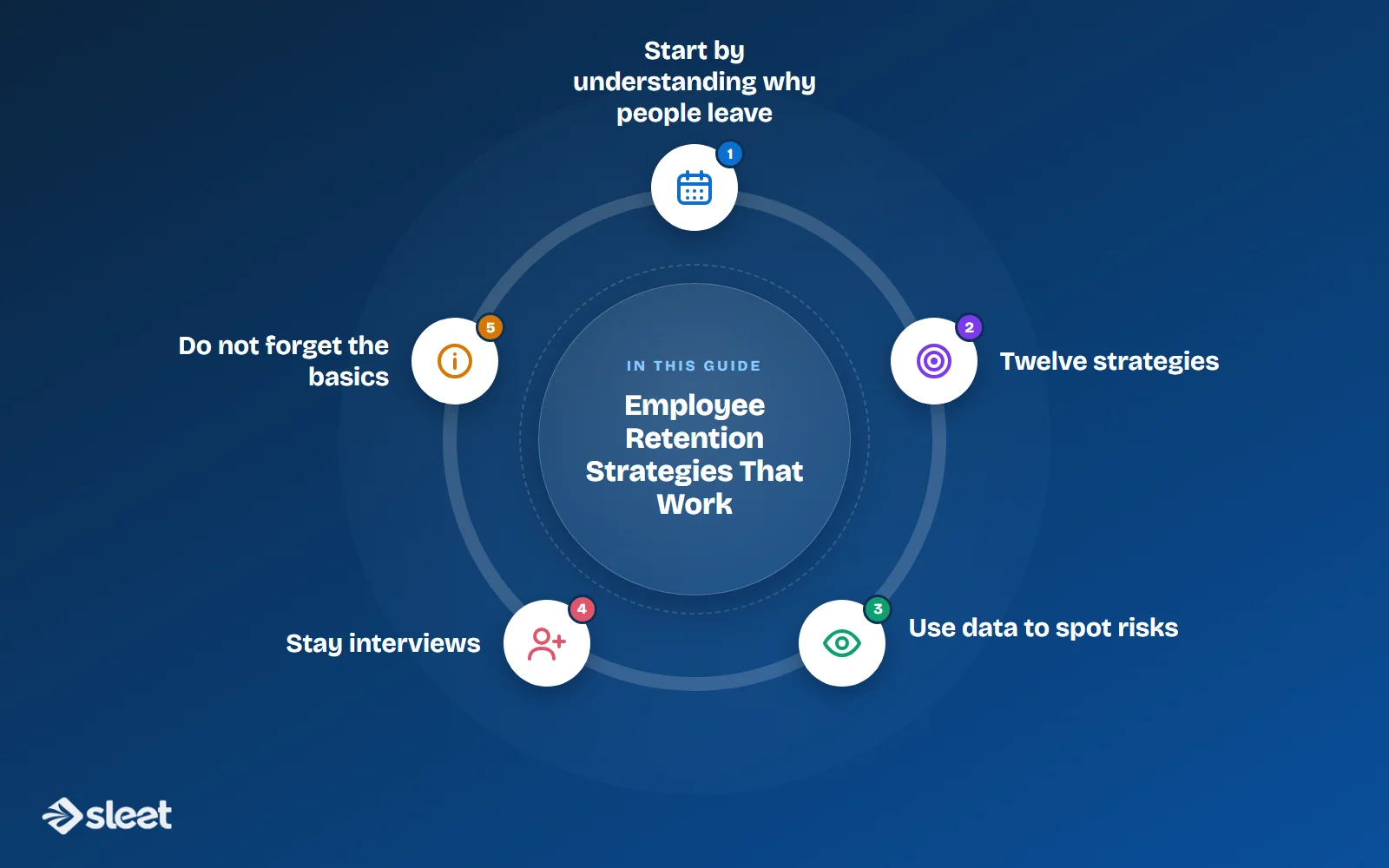
Start by understanding why people leave
Look at exit interview data, attrition by team and tenure, and feedback from engagement surveys. Common reasons include poor managers, limited growth, pay that falls behind the market, burnout and a lack of recognition. Each calls for a different fix.

Twelve strategies
- ✓Pay fairly: Review salaries against the market and fix gaps before people ask.
- ✓Hire for fit and clarity: Give candidates a realistic picture of the job and the culture.
- ✓Run a strong onboarding: The first 90 days influence whether people stay.
- ✓Train your managers: Most resignations are about the manager, not the company.
- ✓Show career paths: Publish levels, skills and what it takes to move up.
- ✓Offer learning: Budgets, courses and stretch projects.
- ✓Recognise good work: Do it regularly, specifically and publicly where suitable.
- ✓Provide flexibility: Hybrid options, flexible hours and fair leave policies.
- ✓Protect wellbeing: Workload checks, mental health support and reasonable hours.
- ✓Listen with stay interviews: Ask current staff what keeps them and what might make them leave.
- ✓Be transparent: Share company direction and decisions.
- ✓Build belonging: Teams that feel connected tend to stay together.
Use data to spot risks
Track signs such as falling engagement scores, increased absence, declining participation and long periods without promotion or a pay review. Combine them into a simple risk view for managers.

Stay interviews
Ask three questions: What do you look forward to at work? What would make you consider leaving? What could we change to make your job better? Act on at least one thing quickly, so people see that speaking up works.
Do not forget the basics
Pay on time, correct payslips, easy leave approvals and a fast response to queries are retention factors too. Employees notice when the basics are unreliable.
People rarely leave a company; they leave a situation that nobody noticed or fixed.
Review attrition quarterly, share findings with leaders and measure the effect of each initiative before adding another.

Written by
HR Manager, Airwix Technologies (Sleet)
Nihit Dobariya is the HR Manager at Airwix Technologies in Ahmedabad, where he runs HR and payroll for the team behind Sleet. He writes about payroll, PF and ESIC, professional tax, the labour codes and everyday HR practice for Indian employers, and checks each rule against the official notification before it is published.
LinkedIn profile →