
Sabbatical Leave: How to Offer Extended Breaks Without Losing Control
A sabbatical is an extended break, usually one to six months, offered after long service, with five years a common threshold. Decide eligibility, length, pay, whether benefits continue and who approves. Unpaid time affects PF and ESI wages, and gratuity service continues only if the break counts as leave, so say so in the policy.

A sabbatical is an extended break from work, usually weeks or months, after a long period of service. Employees use it to study, travel, care for family or recover from burnout. Companies offer it to retain experienced people and to prevent exhaustion.
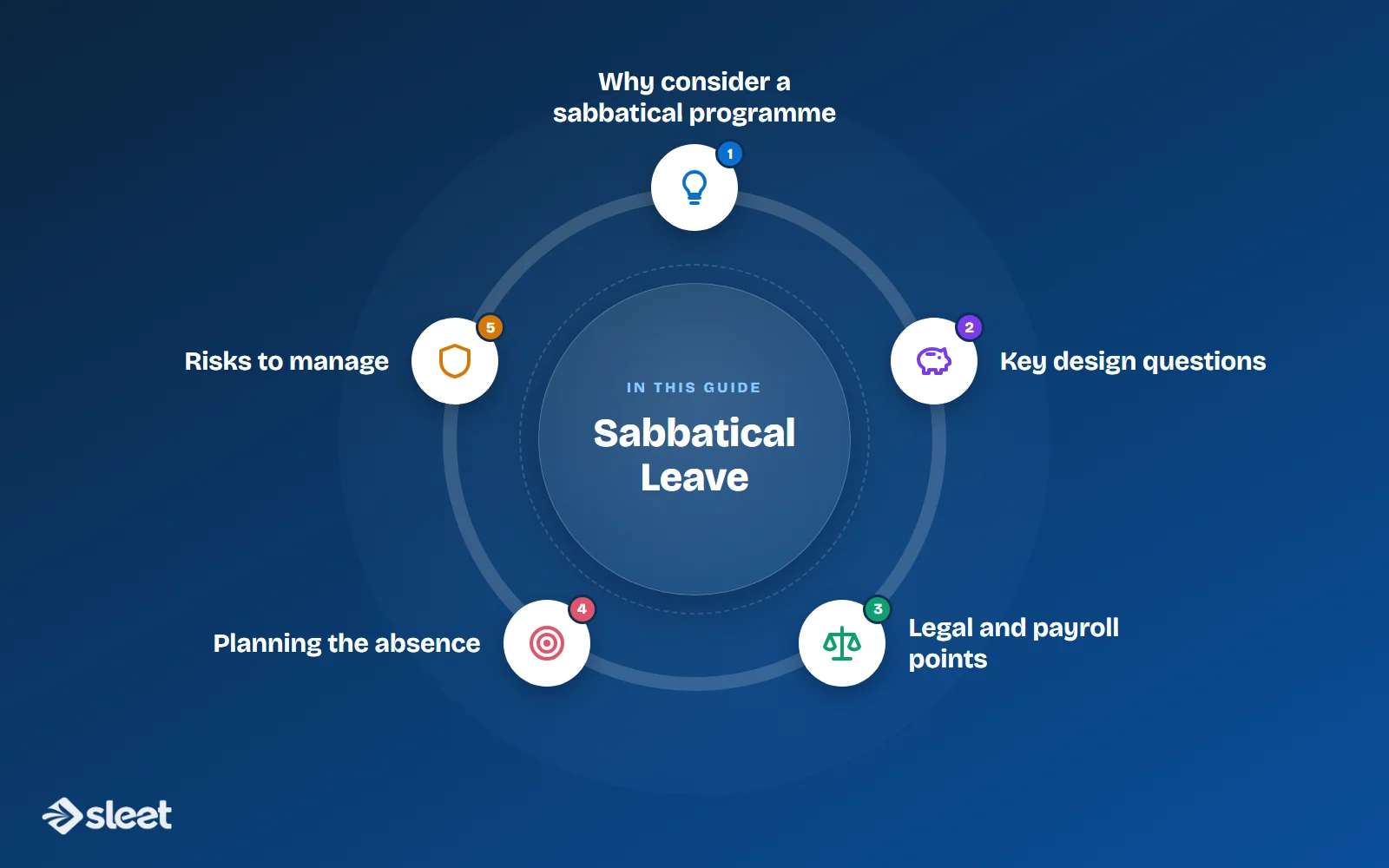
Why consider a sabbatical programme
- ✓It helps retain long-serving employees who might otherwise leave to take a break.
- ✓Rested people return with fresh ideas and renewed energy.
- ✓It makes your employer brand stand out.
- ✓It encourages cross-training as others cover responsibilities.

Key design questions
- ✓Eligibility: For example, five years of continuous service and a satisfactory performance record.
- ✓Duration: One to six months is typical, with a maximum stated.
- ✓Pay: Fully paid, partly paid or unpaid. Unpaid is more common in smaller companies.
- ✓Benefits: Whether health insurance, PF contributions and other benefits continue.
- ✓Approval: Who approves, how far in advance, and how business needs are weighed.
- ✓Moonlighting: Whether other paid work is allowed during the break.
Legal and payroll points
- ✓Unpaid periods affect PF and ESI wages, and gratuity service continues only if the break is treated as leave and not a break in service. State this in the policy.
- ✓Document the leave in writing, with start and end dates.
- ✓Keep insurance active if you promise it.

Planning the absence
- ✓Agree a handover plan at least a month before the break.
- ✓Decide who will cover which responsibilities.
- ✓Keep contact boundaries clear, such as no work calls.
- ✓Plan a short re-entry meeting on return.
Risks to manage
Employees may not return, and the role may change in their absence. A return commitment, clear communication and a flexible re-entry plan reduce this risk.
A sabbatical costs less than a resignation and a replacement hire.
Start with a small pilot, measure retention and satisfaction, and refine the rules before opening the programme to everyone.

Written by
HR Manager, Airwix Technologies (Sleet)
Nihit Dobariya is the HR Manager at Airwix Technologies in Ahmedabad, where he runs HR and payroll for the team behind Sleet. He writes about payroll, PF and ESIC, professional tax, the labour codes and everyday HR practice for Indian employers, and checks each rule against the official notification before it is published.
LinkedIn profile →