
Year-End Payroll Checklist for the Indian Financial Year
Before 31 March, verify tax proofs and recompute TDS for the remaining months, reconcile TDS deducted against TDS deposited, apply increments and arrears, provide for bonus and gratuity, close attendance and leave carry-forward, and prepare Form 130 (earlier Form 16) and Form 138 data. Start in February, not in the last week.

The Indian financial year ends on 31 March, and payroll teams have a lot to close before then. A checklist done in February prevents rushed corrections in the final week.
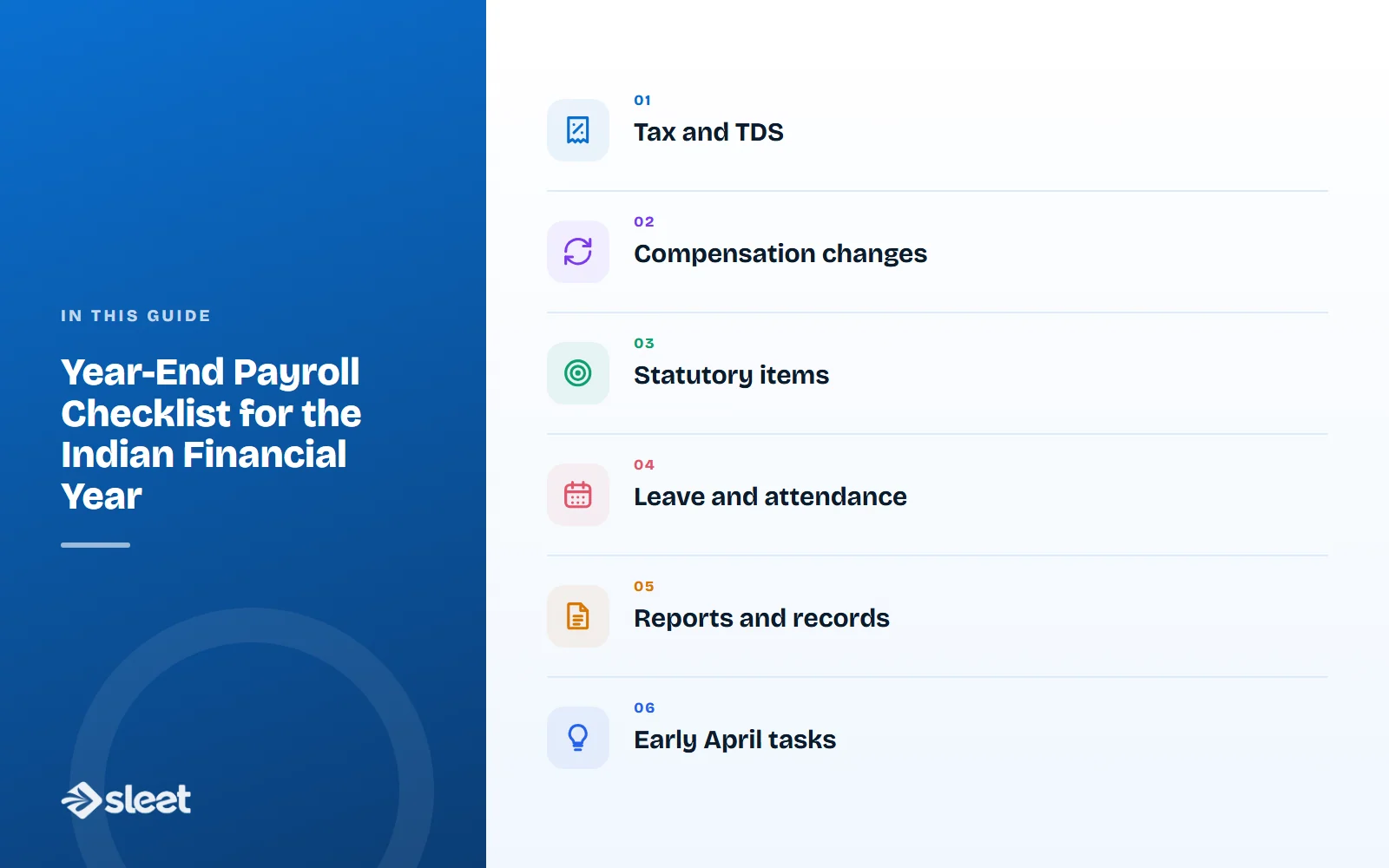
Tax and TDS
- ✓Collect and verify investment proofs by the cut-off date.
- ✓Recompute annual tax for every employee and adjust TDS in the remaining months.
- ✓Reconcile TDS deducted with TDS deposited, month by month.
- ✓Check PAN details for every employee, since errors cause credit mismatches.
- ✓Confirm previous employer income for mid-year joiners.

Compensation changes
- ✓Apply appraisal increments with the correct effective dates.
- ✓Calculate arrears and decide whether to pay them in March or April.
- ✓Provide for variable pay and bonus in the accounts for the year.
- ✓Revisit salary structures against any Budget changes.
Statutory items
- ✓File the pending PF and ESI returns and reconcile contributions.
- ✓Pay professional tax for the final period.
- ✓Check statutory bonus eligibility and set aside the amount.
- ✓Review gratuity liability and leave encashment provisions.

Leave and attendance
- ✓Close attendance for the year and lock past months.
- ✓Process leave carry-forward and lapse as per policy.
- ✓Compute leave encashment for those who are eligible.
Reports and records
- ✓Generate the annual payroll register and cost summary.
- ✓Reconcile payroll cost with the general ledger.
- ✓Archive payslips, challans and returns in a structured folder.
- ✓Prepare data for Form 130 (Form 16) and the Form 138 (Form 24Q) annexure.
Early April tasks
- ✓Reset leave balances.
- ✓Collect regime choices and fresh declarations.
- ✓Load new slabs and statutory rates.
Closing the year well is mostly about decisions made in January and February.
A year-end calendar with named owners and dates turns a stressful quarter into a routine one. Always cross-check the figures with your finance team and tax advisor before filing.

Written by
HR Manager, Airwix Technologies (Sleet)
Nihit Dobariya is the HR Manager at Airwix Technologies in Ahmedabad, where he runs HR and payroll for the team behind Sleet. He writes about payroll, PF and ESIC, professional tax, the labour codes and everyday HR practice for Indian employers, and checks each rule against the official notification before it is published.
LinkedIn profile →