
TDS on Salary (Section 392, Earlier 192): How Employers Calculate and Deposit It
Since 1 April 2026, salary TDS falls under Section 392 of the Income-tax Act, 2025 (earlier Section 192). The employer estimates each employee's yearly tax under their chosen regime and deducts it monthly, deposits it by the 7th of the next month, files Form 138 every quarter and issues Form 130 (earlier Form 16) by 15 June.
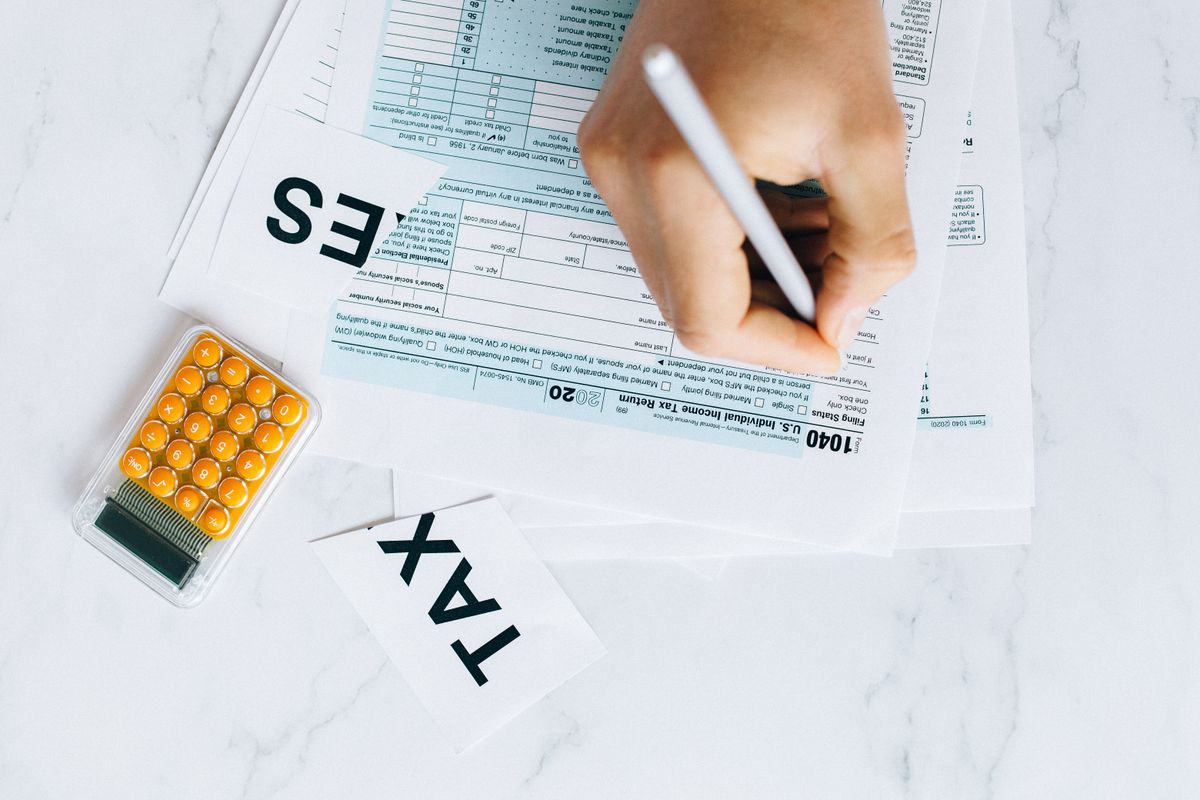
Every employer that pays salary above the basic exemption limit has to deduct income tax at source. Since 1 April 2026 the rule is Section 392 of the Income-tax Act, 2025. It was Section 192 under the 1961 Act, and most people still search for it by that number. The method is the same: estimate the year's tax, then deduct it month by month.
How the deduction works
The employer estimates the employee's taxable salary for the year, works out tax under the employee's chosen regime, and spreads that tax over the months. The estimate is revised whenever pay changes, a bonus is declared or the employee submits new declarations.

Steps to compute
- Add up annual salary, including perquisites and expected bonuses.
- Apply the exemptions that the regime allows. HRA and LTA are available only under the old regime.
- Deduct the standard deduction: ₹75,000 under the new regime and ₹50,000 under the old one.
- Under the old regime, deduct eligible investments, which are now under Section 123 (earlier 80C), up to ₹1.5 lakh.
- Apply the slab rates and add 4 percent cess.
- Divide the tax by the months remaining in the year.
New regime slabs for 2026-27
| Taxable income | Rate |
|---|---|
| Up to ₹4,00,000 | Nil |
| ₹4,00,001 to ₹8,00,000 | 5 percent |
| ₹8,00,001 to ₹12,00,000 | 10 percent |
| ₹12,00,001 to ₹16,00,000 | 15 percent |
| ₹16,00,001 to ₹20,00,000 | 20 percent |
| ₹20,00,001 to ₹24,00,000 | 25 percent |
| Above ₹24,00,000 | 30 percent |
A rebate means no tax on taxable income up to ₹12 lakh, so a salaried employee with a ₹75,000 standard deduction pays no tax on a salary up to about ₹12.75 lakh. The Budget did not change the slabs for 2026-27.

Regime choice
The new regime applies unless the employee opts for the old one. The choice decides the TDS calculation, and the final choice can still be made when filing the return.
Deposit and returns
- ✓Deposit the tax by the 7th of the next month. For tax deducted in March, the due date is 30 April.
- ✓File the quarterly salary return, Form 138 (earlier Form 24Q), by 31 July, 31 October, 31 January and 31 May.
- ✓Issue Form 130 (earlier Form 16) by 15 June after the year ends.
- ✓Collect investment and HRA declarations on Form 124 (earlier Form 12BB).
A late return attracts a fee of ₹200 a day, so file on time even if a correction is needed later.
Common errors
- ✓Using last year's slabs after a Budget change
- ✓Not recalculating when pay or regime changes
- ✓Missing the previous employer's income for mid-year joiners
- ✓A wrong or missing PAN, which breaks the credit on the employee's statement
Read next
See what changed in the Income-tax Act 2025 for payroll and Form 130 explained.
Sources

Written by
HR Manager, Airwix Technologies (Sleet)
Nihit Dobariya is the HR Manager at Airwix Technologies in Ahmedabad, where he runs HR and payroll for the team behind Sleet. He writes about payroll, PF and ESIC, professional tax, the labour codes and everyday HR practice for Indian employers, and checks each rule against the official notification before it is published.
LinkedIn profile →