
Stipend vs Salary: Key Differences for Interns and Trainees
A stipend is a fixed allowance that supports an intern or trainee while they learn. Salary is wages for work under an employment contract. Stipend recipients usually get no paid leave, PF or gratuity, but an intern who works like an employee may be treated as one, so document the arrangement in an internship letter.

A stipend is a fixed allowance paid to an intern, trainee or apprentice to support them while they learn. A salary is wages paid for work under an employment contract. The words are not interchangeable, and using the wrong one can create legal and tax questions.
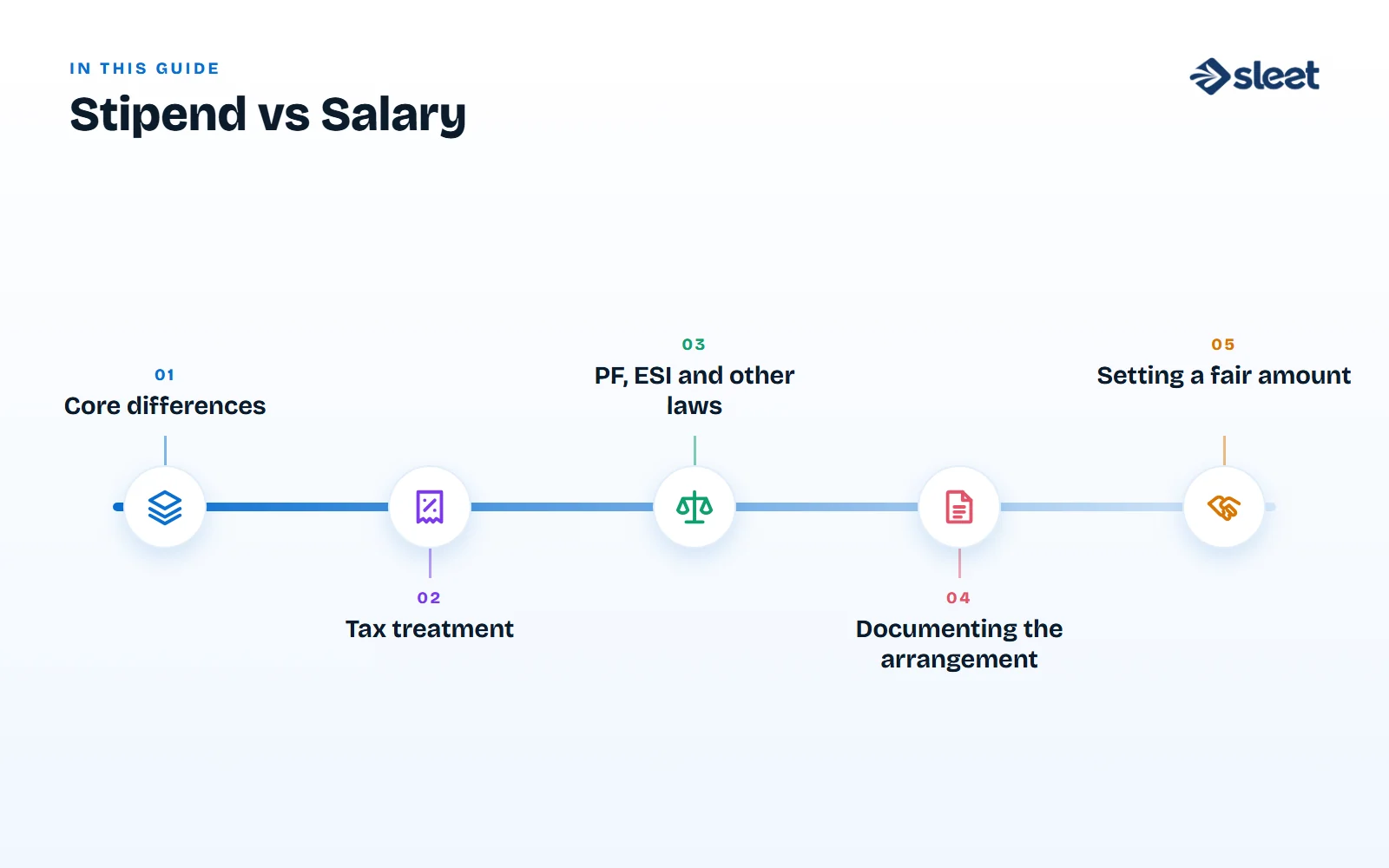
Core differences
- ✓Purpose: A stipend supports learning, a salary pays for work.
- ✓Relationship: Interns are usually not employees in the legal sense, though that depends on the actual terms.
- ✓Duration: Stipends are short and fixed, salaries run for the length of employment.
- ✓Benefits: Stipend recipients commonly do not get paid leave, PF or gratuity.

Tax treatment
For the person receiving it, a stipend is generally treated as income and may be taxable depending on their total income. The employer may need to deduct TDS if the amount crosses the threshold applicable to the payment. Keep a clear record of what was paid and why.
PF, ESI and other laws
Whether PF or ESI applies depends on the person's status. Apprentices under the Apprentices Act get a stipend under the Act. Interns who work like employees, with fixed hours and duties, may be argued to be employees, and in that case wages and statutory benefits could apply. Get legal advice if your intern programme is large or long.

Documenting the arrangement
- ✓Issue an internship letter that states the purpose, period and stipend.
- ✓State whether the position can lead to employment.
- ✓Define confidentiality and intellectual property terms.
- ✓Provide a completion certificate at the end.
Setting a fair amount
Compare against local market rates and the role's learning value. An unpaid internship that mirrors a full-time role can harm your employer brand and may raise legal risk.
If you would not want the arrangement described in a court, rewrite it.
Pay stipends through the same payroll system as salaries so the records are consistent, auditable and ready for tax filing.

Written by
HR Manager, Airwix Technologies (Sleet)
Nihit Dobariya is the HR Manager at Airwix Technologies in Ahmedabad, where he runs HR and payroll for the team behind Sleet. He writes about payroll, PF and ESIC, professional tax, the labour codes and everyday HR practice for Indian employers, and checks each rule against the official notification before it is published.
LinkedIn profile →