
Sign-On Bonus in India: Taxation, Clawback and Policy Tips
A sign-on bonus is a one-time payment to a new hire, taxed as salary with TDS under Section 392 (earlier Section 192) in the month it is paid. To make a clawback hold up, put it in writing, state the period (commonly 6 to 12 months) and the repayable share, and keep both reasonable, because courts look at fairness.

A sign-on bonus, also called a joining bonus, is a one-time payment offered to a new hire. Employers use it to compensate a candidate for benefits they give up at the previous company, such as an unpaid bonus or ESOP vesting, or to close an offer in a competitive market.
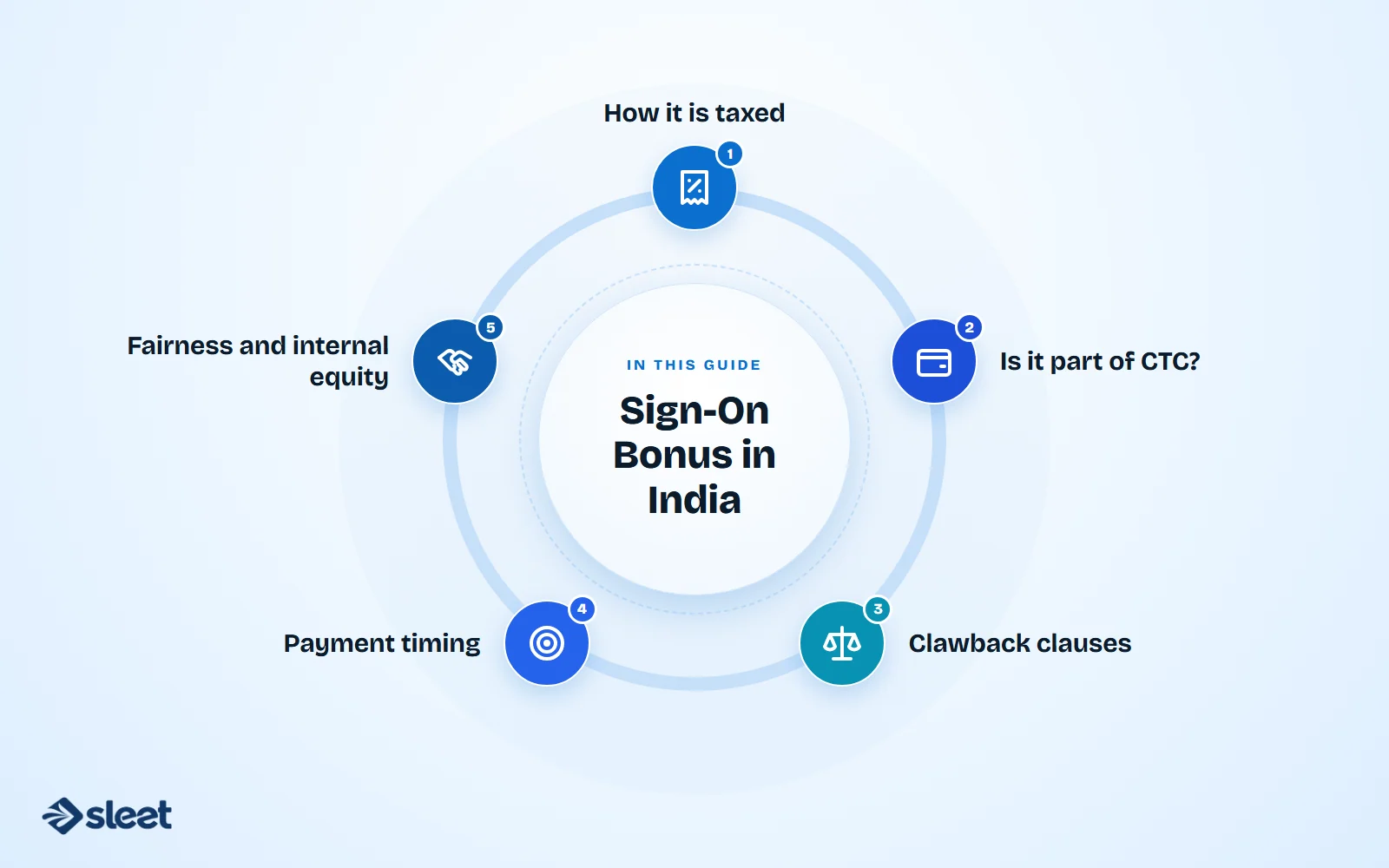
How it is taxed
The bonus is part of salary income. It is added to the employee's taxable income in the month it is paid, and TDS is deducted under Section 392 (earlier Section 192). A large one-time payment can push the monthly TDS up sharply, so employees should be told in advance.

Is it part of CTC?
It depends on the offer. Some employers list it as a separate one-time item outside the annual CTC, others include it in the first-year CTC. State this clearly in writing so that salary comparisons in future years are not distorted.
Clawback clauses
Most companies attach conditions: if the employee leaves within a set period, usually 6 to 12 months, they must repay part or all of the bonus. For a clawback to hold, it should be:
- ✓Written into the offer letter or a signed agreement.
- ✓Specific about the period and the repayable percentage, for example reducing by month.
- ✓Clear about whether the repayment is of the gross or the post-tax amount.
Indian courts look at whether such terms are reasonable and not a restraint on trade, so keep the amounts and period proportionate.

Payment timing
- ✓On the first payroll after joining.
- ✓In instalments over the first year, which reduces the risk of early exits.
- ✓After probation, which aligns with confirmation.
Fairness and internal equity
A generous sign-on bonus for a new hire can upset existing team members. Consider a retention plan for critical current employees so the message is not that loyalty goes unrewarded.
A joining bonus gets someone through the door; the first ninety days decide whether they stay.
Record the bonus as a separate earning type in your payroll system, so TDS, clawback tracking and final settlement all pick it up correctly.

Written by
HR Manager, Airwix Technologies (Sleet)
Nihit Dobariya is the HR Manager at Airwix Technologies in Ahmedabad, where he runs HR and payroll for the team behind Sleet. He writes about payroll, PF and ESIC, professional tax, the labour codes and everyday HR practice for Indian employers, and checks each rule against the official notification before it is published.
LinkedIn profile →