
Psychological Safety at Work: How to Build a Team Where People Speak Up
Psychological safety is the shared belief that you can speak up, ask a question or admit a mistake without being punished or embarrassed. Managers build it by asking for views first, admitting their own errors, responding to bad news with curiosity, focusing on process not blame, and acting on what people raise.
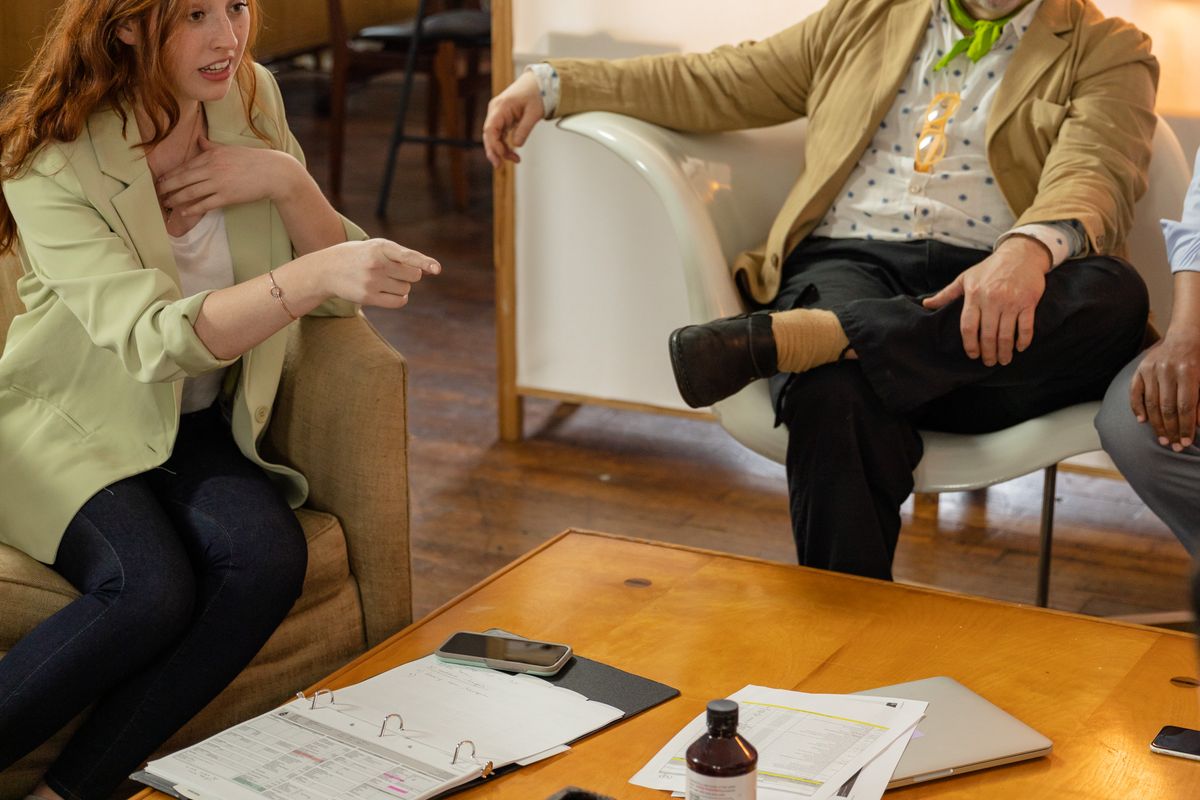
Psychological safety is the shared belief that you can speak up, ask questions or admit a mistake without being punished or embarrassed. Teams with it learn faster, catch problems earlier and generate more ideas, because people are not busy protecting themselves.
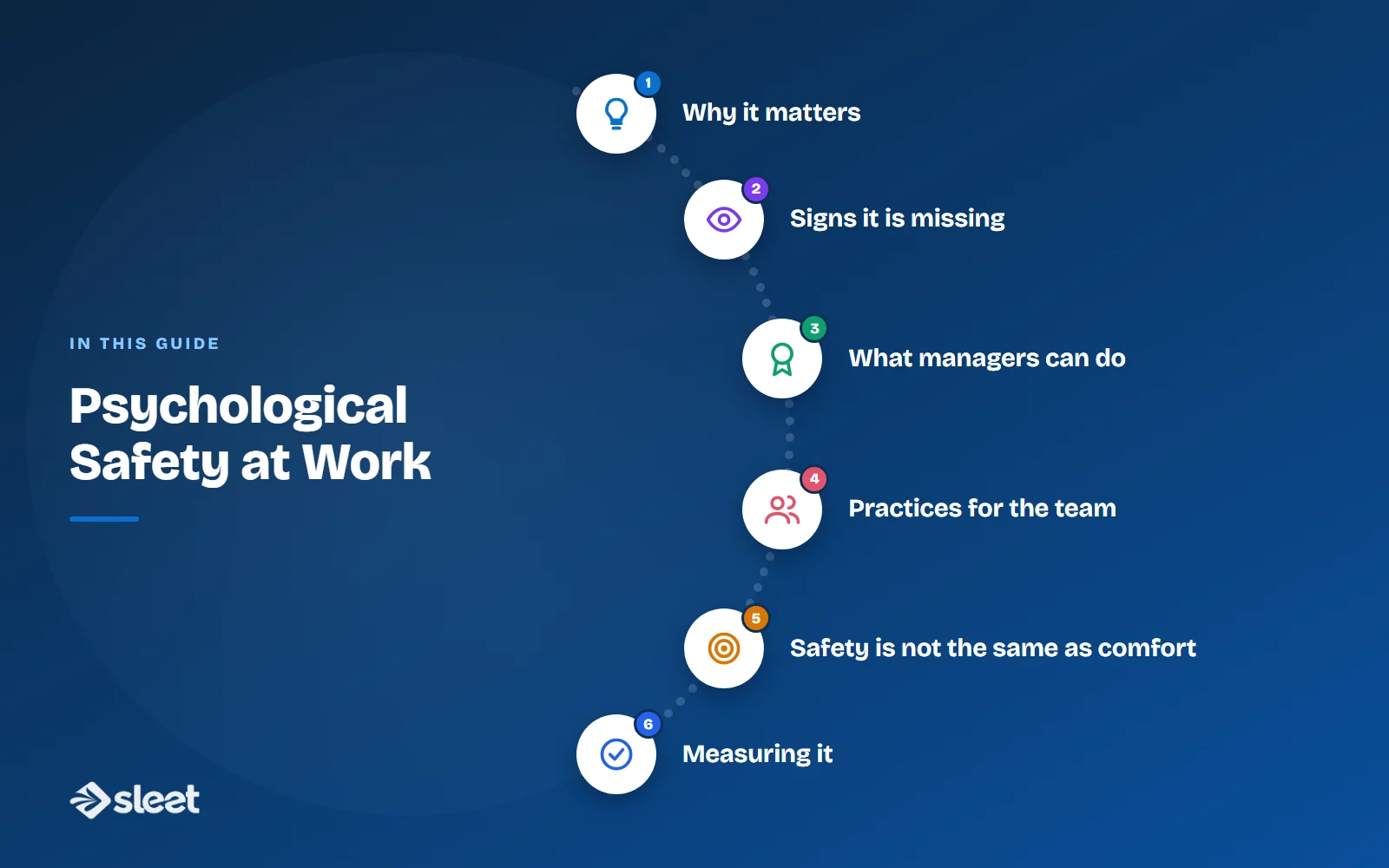
Why it matters
When people fear blame, they hide errors. A wrong number in a payroll file, an unclear instruction or a safety concern can go unreported until it becomes expensive. In psychologically safe teams, small issues surface quickly and get fixed.

Signs it is missing
- ✓Meetings where only the senior person speaks.
- ✓Mistakes explained away or hidden.
- ✓Few questions, even when instructions are unclear.
- ✓Ideas that come only after the boss has expressed a view.
- ✓High turnover or silent resignation.
What managers can do
- ✓Ask for input: Invite views before sharing your own.
- ✓Admit your own mistakes: It shows that errors are survivable.
- ✓Respond with curiosity: When someone reports a problem, thank them and ask what can be learned.
- ✓Separate people from problems: Focus on process, not blame.
- ✓Protect dissent: Show that disagreement is welcome by acknowledging it.
- ✓Follow through: Act on issues raised, or explain why not.

Practices for the team
- ✓Hold short retrospectives after projects to discuss what went well and what did not.
- ✓Use blameless reviews for incidents.
- ✓Rotate who leads meetings so that voices are balanced.
- ✓Create anonymous channels for sensitive concerns, alongside open ones.
Safety is not the same as comfort
A safe team can still have high standards and difficult conversations. The difference is that challenge is directed at ideas, with respect for people.
Measuring it
Include questions such as, can I admit a mistake without fear, and do people here accept differences, in your engagement survey. Track trends by team.
The measure of a safe team is how quickly bad news travels.
Start small: one meeting habit, one thank-you for honest feedback, and consistent follow-up. Trust is built through repetition.

Written by
HR Manager, Airwix Technologies (Sleet)
Nihit Dobariya is the HR Manager at Airwix Technologies in Ahmedabad, where he runs HR and payroll for the team behind Sleet. He writes about payroll, PF and ESIC, professional tax, the labour codes and everyday HR practice for Indian employers, and checks each rule against the official notification before it is published.
LinkedIn profile →