
Eradicating Toxicity in the Workplace: A Practical Starting Point
Workplace toxicity is usually a slow build-up of normalised small behaviours, such as taking credit, treating disagreement as disloyalty or labelling people who raise concerns as difficult. Start with an anonymous feedback channel that has an owner and visible follow-up, track attrition reasons by team, and stop promoting strong individual performers into management roles they handle badly.

A toxic workplace is rarely the result of one dramatic event. It builds slowly from small behaviours that people stop noticing: a manager who takes credit in meetings, a team where disagreeing is treated as disloyalty, an unwritten rule that anyone who raises a concern gets labelled difficult.
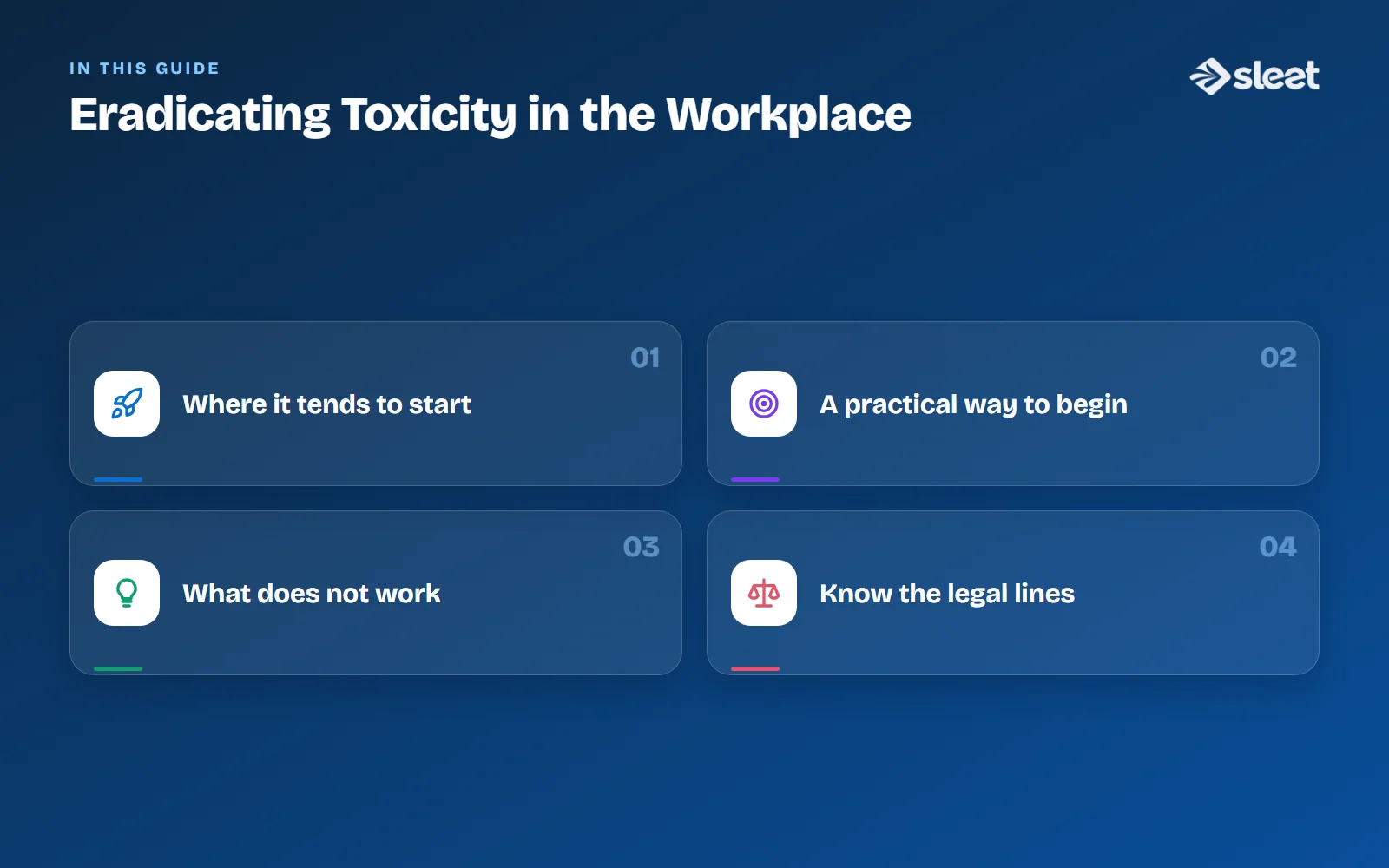
Where it tends to start
- ✓Feedback only travels downwards. There is no safe way to report a manager's behaviour.
- ✓The same complaint appears in exit interviews, year after year, and nothing visibly changes.
- ✓Strong people leave quietly, because earlier attempts to raise problems went nowhere.
- ✓Someone with excellent individual results is promoted into management and nobody checks how they treat people.
If the same complaint shows up in exit interviews two years in a row, it is a structural problem and not a personality clash.

A practical way to begin
- Open a feedback channel that someone owns. An anonymous form works only if a named person reads it, replies in public to what they can, and reports what changed.
- Look at attrition by team. A company-wide figure can look healthy while one department loses people every quarter. Check the reasons people give on exit, team by team.
- Separate performance from management. When you promote, ask two questions: does this person deliver, and do people do well working for them? Include input from the people who report to them.
- Train managers on the basics. Giving feedback, handling disagreement and running fair meetings can all be taught.
- Act on the first clear case. One visible, fair response teaches more than any policy document.
- Protect people who speak up. Make it explicit that raising a concern in good faith will not hurt them, and then follow through.
What does not work
A one-off workshop, a values poster, or telling people to be more resilient. Those change the language and leave the behaviour where it was.

Know the legal lines
Sexual harassment complaints must go to the Internal Committee under the POSH Act. Discrimination, bullying and retaliation should have their own route in your grievance policy, with set timelines.

Written by
HR Manager, Airwix Technologies (Sleet)
Nihit Dobariya is the HR Manager at Airwix Technologies in Ahmedabad, where he runs HR and payroll for the team behind Sleet. He writes about payroll, PF and ESIC, professional tax, the labour codes and everyday HR practice for Indian employers, and checks each rule against the official notification before it is published.
LinkedIn profile →