
No Call No Show (NCNS): How to Write and Enforce an Absence Policy
Treat a no call no show as a process, not a reason to fire on day one. Try to reach the person, send a written reminder, then a show-cause notice by email and registered post, then a final notice before treating it as abandonment. Courts expect natural justice, and a caring first call often settles it.

A no call no show happens when an employee is absent and does not inform their manager or HR. A single instance may be a genuine emergency. A repeated or prolonged pattern becomes a disciplinary matter and eventually a case of job abandonment.
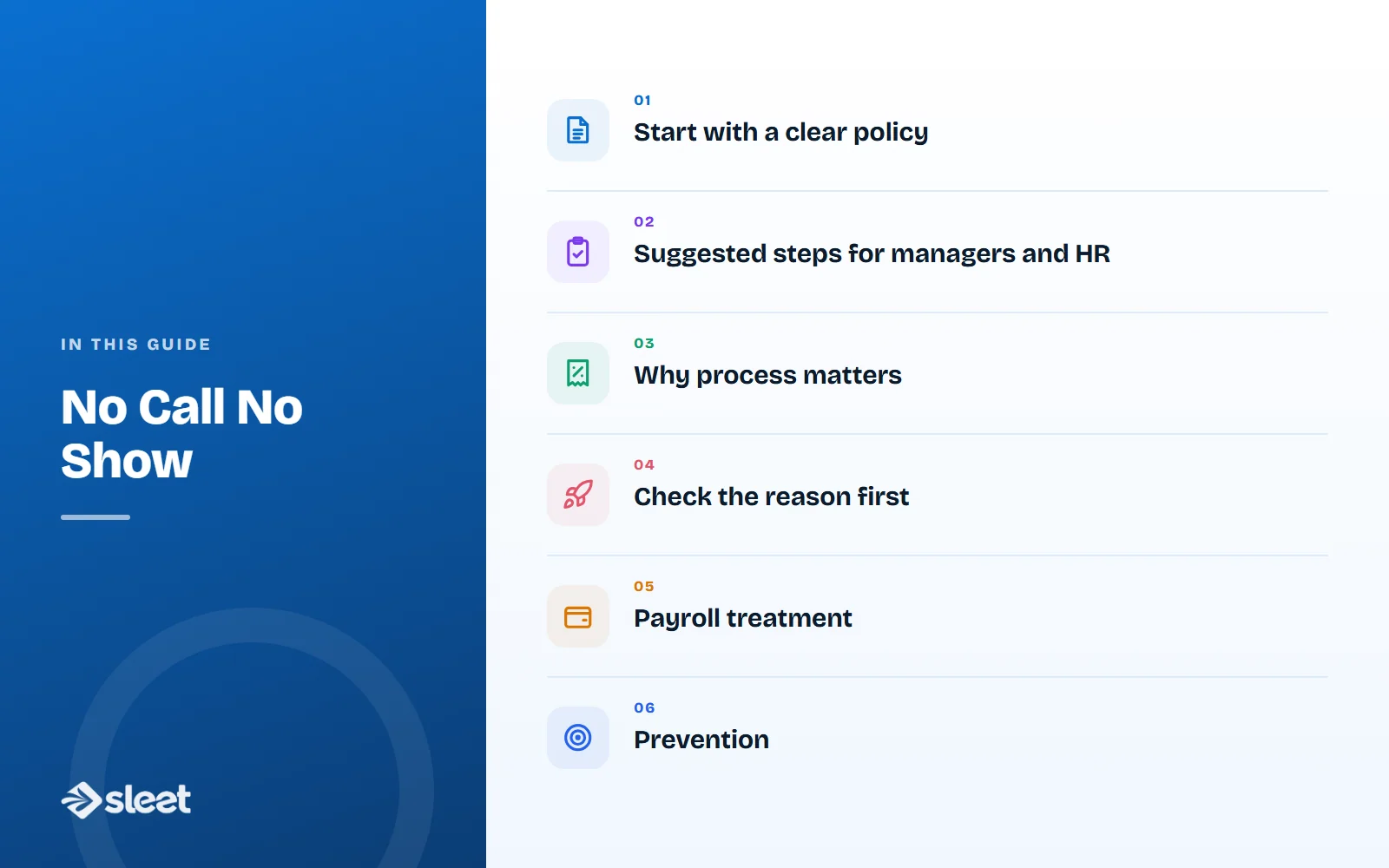
Start with a clear policy
Your attendance policy should say how employees must report an absence, to whom, and by what time. It should also state the consequences of failing to do so, which could range from a verbal warning to loss of pay and termination for repeated breaches.
Suggested steps for managers and HR
- ✓Day 1: The manager tries to contact the employee by phone and message and records the attempts.
- ✓Day 2 or 3: HR sends a written reminder asking the employee to report and explain.
- ✓Day 4 to 7: A formal show-cause notice is sent by email and registered post to the address on record.
- ✓After the notice period: If there is no reply, a final notice states that the company will treat the absence as abandonment.
- ✓Decision: A termination or separation letter follows only after due process.
Why process matters
Indian courts and labour authorities expect employers to follow natural justice, even for absent employees. Terminating without notice and a chance to explain can lead to a dispute, reinstatement orders or compensation claims.

Check the reason first
Before assuming wrongdoing, consider health emergencies, accidents, family bereavement or harassment. A compassionate first contact, particularly with a long-serving employee, often resolves the issue and protects the relationship.
Payroll treatment
- ✓Mark the days as loss of pay unless leave is later approved.
- ✓Hold final settlement only as permitted by law and policy.
- ✓Keep a record of all communication and notices.
Prevention
- ✓Make reporting easy with a mobile app or helpline.
- ✓Set up alerts for managers when an employee is not marked present.
- ✓Hold return-to-work conversations to understand patterns.
The goal is to find out why someone disappeared, and only then decide what follows.
Keep your template notices reviewed by a legal advisor and your state's standing orders in mind.

Written by
HR Manager, Airwix Technologies (Sleet)
Nihit Dobariya is the HR Manager at Airwix Technologies in Ahmedabad, where he runs HR and payroll for the team behind Sleet. He writes about payroll, PF and ESIC, professional tax, the labour codes and everyday HR practice for Indian employers, and checks each rule against the official notification before it is published.
LinkedIn profile →