
HRMS Implementation: A Step-by-Step Rollout Checklist
Roll out a new HRMS in five phases: clean the data, migrate it and check record counts, run one full parallel payroll and compare every line, train managers and employees before go-live, then keep the old system read-only through a full filing cycle. Skipping the parallel run is the most common mistake.

Switching HR systems feels risky because payroll cannot break, even for one month. A staged rollout removes most of the risk by proving the new system before it becomes the system of record.
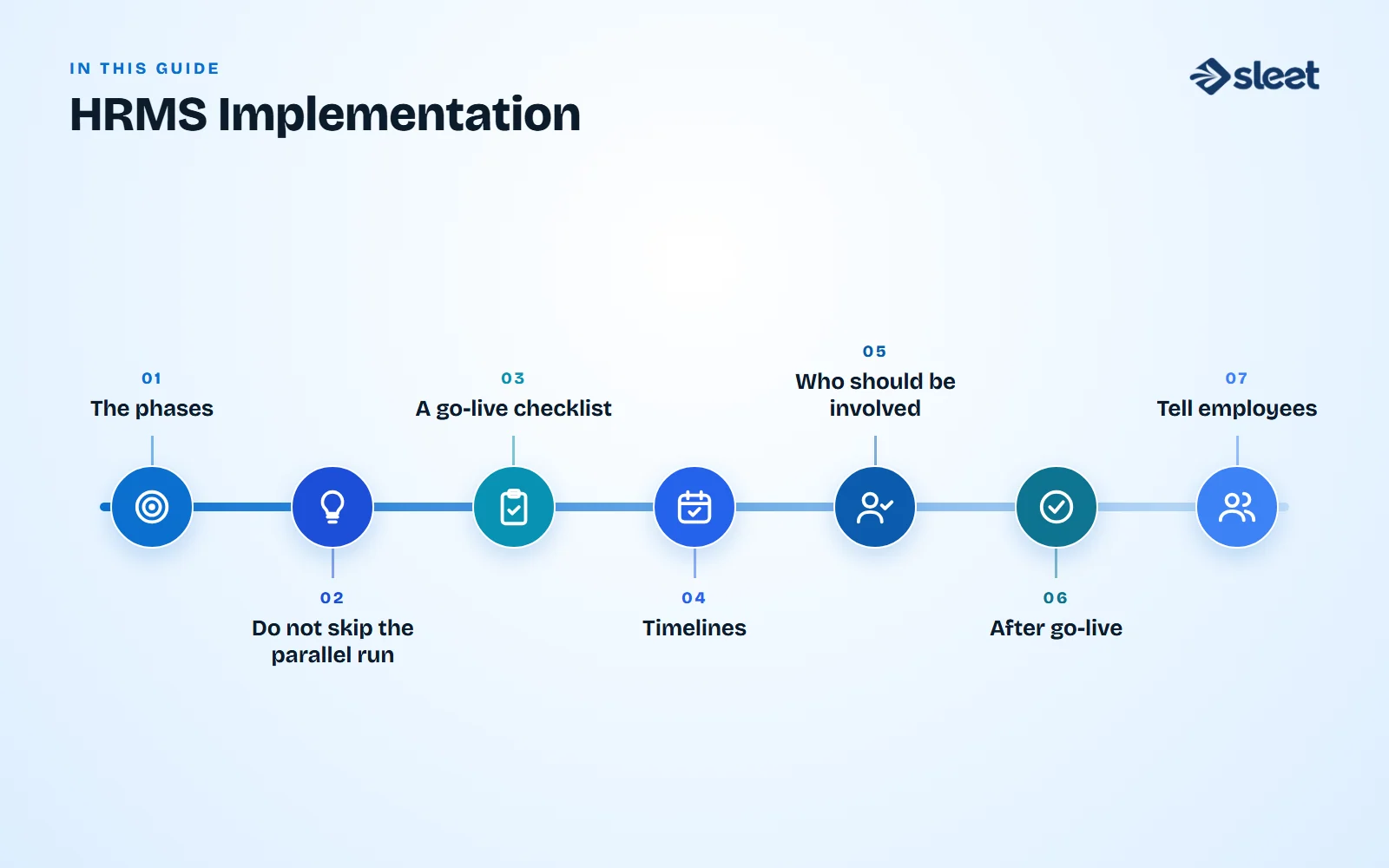
The phases
| Phase | What happens | Done when |
|---|---|---|
| 1. Data audit | Clean up duplicate employees, outdated salary structures and wrong leave balances | The old data is something you would trust |
| 2. Migration | Import profiles, history, year-to-date pay and balances | Record counts and totals match the old system |
| 3. Parallel payroll | Run one full cycle in both systems and compare every line | Every difference has an explanation |
| 4. Training | Walk managers through approvals and employees through self-service | People have used it before go-live |
| 5. Go-live | The new system becomes the system of record | The first live payroll closes cleanly |
| 6. Hypercare | Keep the old system read-only for a filing cycle | A full statutory cycle has passed |

Do not skip the parallel run
The most common rollout mistake is dropping the parallel payroll to save time. It is the step that catches configuration errors, such as a wrong PF setting or a missing allowance, before they reach real salaries.
A go-live checklist
- ✓Salary structures, statutory settings and holidays match your policy for each state.
- ✓Every employee has a bank account, PAN and UAN where applicable.
- ✓Opening balances for leave and tax are loaded.
- ✓Attendance devices or apps are connected and tested.
- ✓Approval chains are set for leave, regularisation and claims.
- ✓Roles and access are reviewed.
- ✓Someone is named to answer questions in the first week.

Timelines
For a company of a few hundred people with reasonably clean data and a vendor that offers migration support, two to four weeks from kickoff to go-live is a common target. Larger companies, several states or messy data take longer.
Who should be involved
HR, finance, IT, a manager from each major team and the vendor's project lead. Give one person authority to decide when something needs a quick answer.
After go-live
- ✓Review the first payroll against the last old one.
- ✓Collect questions and fix the causes, not just the symptoms.
- ✓Check statutory filings generated by the new system.
- ✓Hold a short review at 30 days.
Tell employees
Explain what is changing, when and where to get help. Most complaints after a rollout come from surprises, not from the system.

Written by
HR Manager, Airwix Technologies (Sleet)
Nihit Dobariya is the HR Manager at Airwix Technologies in Ahmedabad, where he runs HR and payroll for the team behind Sleet. He writes about payroll, PF and ESIC, professional tax, the labour codes and everyday HR practice for Indian employers, and checks each rule against the official notification before it is published.
LinkedIn profile →