
Building Scalable Growth Strategies For Business
Scalable growth comes from repeatable processes, not extra effort. Document what works, automate repetitive work, hire ahead of demand for the roles that block you, track a few leading numbers and push decisions down to the lowest sensible level. Fix operations before adding volume, or every new customer adds complexity.

A business is scalable when it can take on twice the work without needing twice the people, time or stress. Most small companies are not there yet. Their growth comes from the owner doing more, and it stops when the owner runs out of hours.
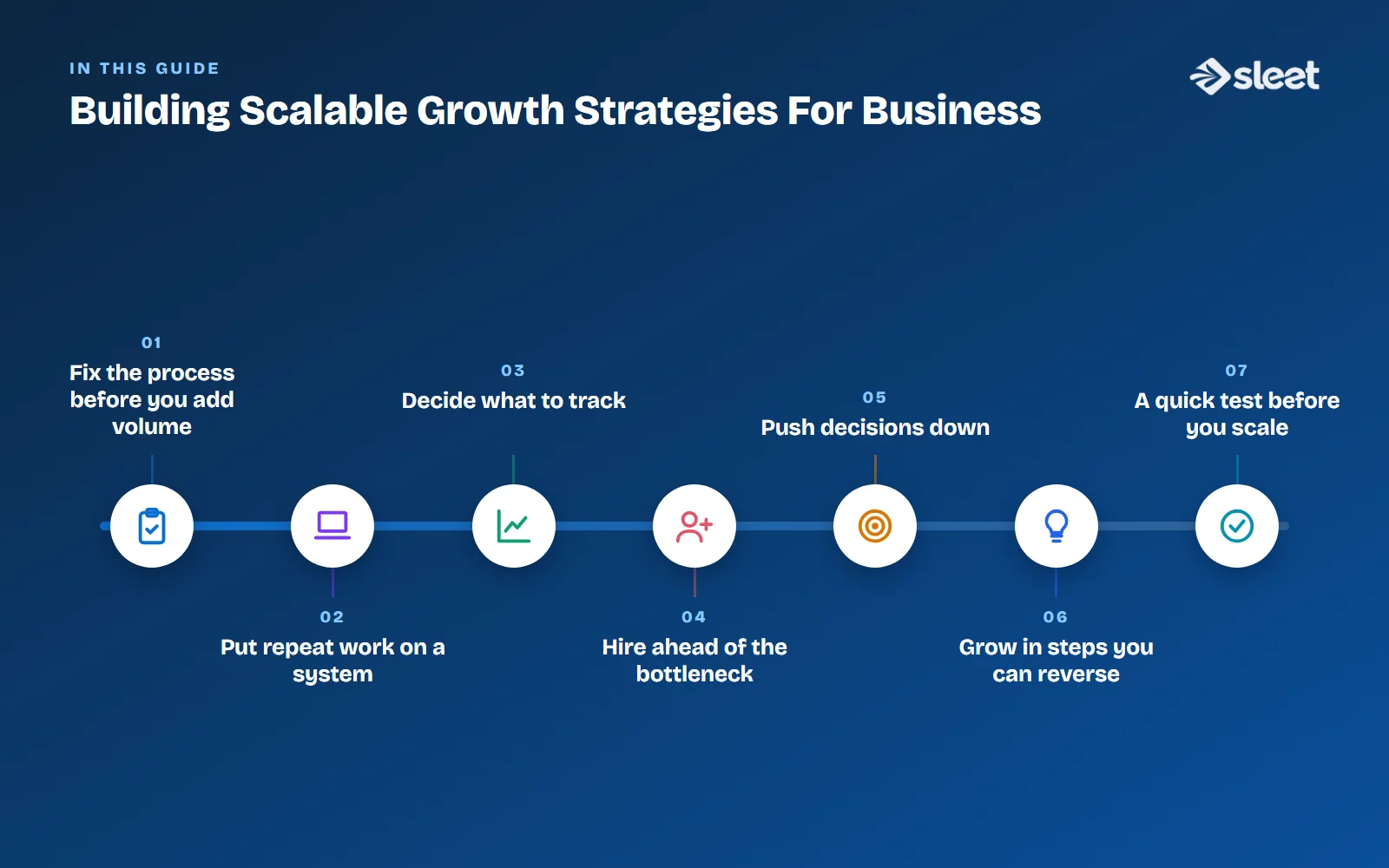
Fix the process before you add volume
Adding customers to a messy process multiplies the mess. Before you push for growth, write down how an order, an invoice, a hire or a payroll run actually happens today. Cut the steps that exist only out of habit. What is left is what you can repeat, train people for and later automate.

Put repeat work on a system
Anything you do the same way every month should not depend on one person's memory. Payroll, GST filing, attendance, invoicing and follow-ups all fall in that group. A spreadsheet holds up until the third branch or the fiftieth employee, and then it starts producing errors that someone has to find and fix.
Decide what to track
Pick four or five numbers that tell you early whether growth is healthy. Good candidates are revenue per employee, how many days customers take to pay, the share of repeat customers, time to fill a role and payroll cost as a share of revenue. Look at them every month. If one moves the wrong way, you want to hear it from the report and not from the bank balance.

Hire ahead of the bottleneck
Find the place where work waits for a person and hire for that first. In many growing firms it is accounts, dispatch or a team lead, not another salesperson. Write the job down before you hire, so the next person can learn it without the founder in the room.
Push decisions down
If every price change, leave approval or discount needs the owner, the owner is the limit on growth. Set clear rules, such as spending limits, discount bands and approval chains, and let managers decide inside them. Review the exceptions rather than every decision.
Grow in steps you can reverse
Open one branch before three. Try a new product with a small group of customers first. Check your cash before each step, because growth spends money before it earns any.
A quick test before you scale
- ✓Could someone else run this process tomorrow from the notes?
- ✓Do you know your margin on the next customer?
- ✓Would a second location work with the same team and tools?
If the answer to any of these is no, fix that first.

Written by
Founder, Airwix Technologies (Sleet)
Vatsal Sutariya is the founder of Airwix Technologies in Ahmedabad, the company that builds Sleet: SleetHR for HR and payroll, and Sleet Accounting for GST billing and books. He writes about GST, invoicing, business tax and choosing software for Indian businesses, and checks each rule against the official notification before it is published.
LinkedIn profile →