
Superannuation Fund: How Employer Retirement Benefits Work in India
Superannuation is a discretionary employer retirement benefit, usually for senior staff, paid into an approved fund on top of PF and gratuity, commonly up to 15 percent of basic. Employer contributions to EPF, NPS and superannuation above ₹7.5 lakh a year are taxed in the employee's hands, so review high packages.

Superannuation is a retirement benefit offered by some employers, usually for senior employees, in addition to PF and gratuity. The company contributes to a fund, often managed by an insurer, and the employee receives a pension or lump sum after retirement.
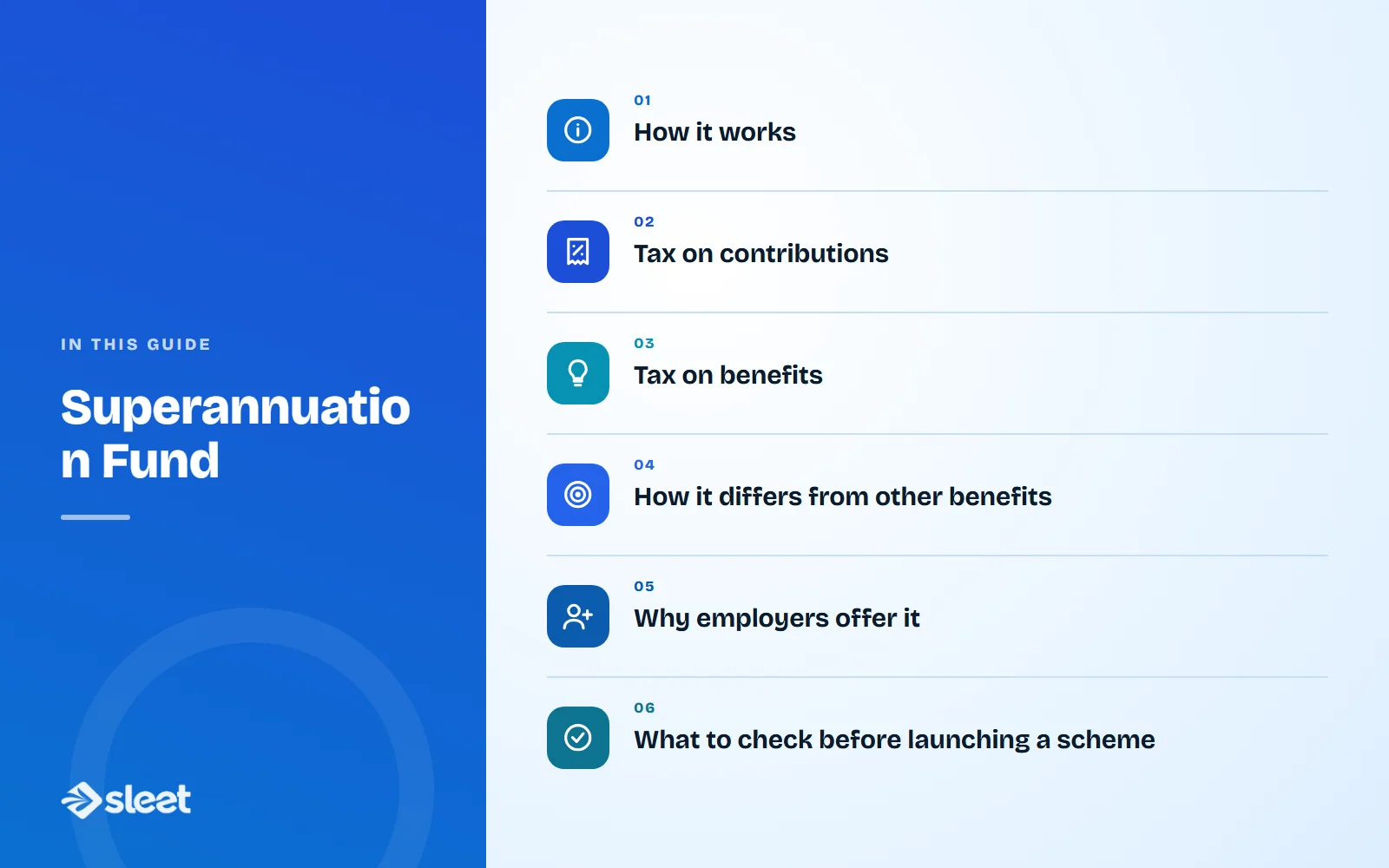
How it works
The employer pays a percentage of basic salary, commonly up to 15 percent, to an approved superannuation fund. The fund invests the money and pays benefits when the employee retires or leaves. Some schemes are defined contribution, where the payout depends on investment results.

Tax on contributions
The employer's contribution to a recognised fund is not a taxable perquisite as such, but the total of employer contributions to EPF, NPS and superannuation above ₹7.5 lakh in a year is added to the employee's taxable income. Interest and dividend on such excess contributions is also taxable. This cap is the reason senior staff with large packages need to review the structure.
Tax on benefits
On retirement, the benefit is treated according to the rules for approved funds, and part may be taxed depending on how it is withdrawn. If the employee leaves before retirement and takes the money out, the treatment can be less favourable. Employees should read the scheme terms carefully.

How it differs from other benefits
- ✓EPF: Mandatory for covered employees, rates fixed by law.
- ✓NPS: Voluntary pension account with a choice of investments.
- ✓Gratuity: A lump sum for long service, based on a formula.
- ✓Superannuation: Discretionary employer benefit, subject to company policy.
Why employers offer it
It supports retention of senior talent, makes the compensation package more attractive, and may be tax-efficient for the employee within limits.
What to check before launching a scheme
- ✓Eligibility rules and vesting terms.
- ✓Choice of fund manager and fees.
- ✓How contributions are reported on payslips and in the annual tax computation.
- ✓Communication so employees know what they have.
Retirement benefits are only valued by employees who understand them.
Because the rules interact with other retirement schemes, take advice from a tax professional before introducing or changing a superannuation plan.

Written by
HR Manager, Airwix Technologies (Sleet)
Nihit Dobariya is the HR Manager at Airwix Technologies in Ahmedabad, where he runs HR and payroll for the team behind Sleet. He writes about payroll, PF and ESIC, professional tax, the labour codes and everyday HR practice for Indian employers, and checks each rule against the official notification before it is published.
LinkedIn profile →